The railway tragedy in Andalusia has returned to the spotlight after the European Union Agency for Railways joined the investigation. For Spain, this event carries particular weight—not just in terms of finding those responsible, but also in maintaining trust in the national transport system. Safety concerns and the transparency of the investigation are now crucial for the millions of passengers who rely on trains every day.
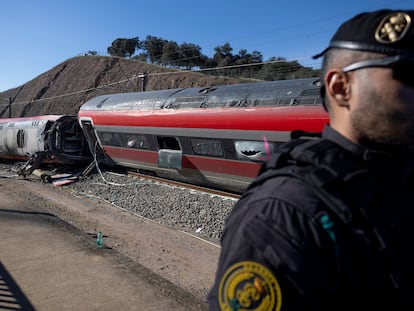
The Commission for the Investigation of Railway Accidents has officially invited European specialists to take part in analyzing the circumstances of the disaster that occurred on January 18 near Adamuz (Adamuz, Córdoba). The collision of two trains claimed 46 lives, making it one of the most serious incidents on Spanish railways in recent years. Preliminary reports suggest the tragedy may have been caused by a crack in a welded rail joint, leading to the derailment of an Iryo train and its subsequent collision with an oncoming Alvia train.
Technical details
Technical experts note that the investigation is moving slowly due to the lack of a court permit to inspect the damaged section of track. Without this document, essential examinations cannot proceed and the exact cause of the accident cannot be determined. Currently, the commission is gathering information from Adif, Renfe Viajeros, and Iryo, as well as requesting data on the operation of signal systems and all communications that took place immediately after the incident.
Special attention is being paid to the analysis of data from the onboard recorders of both trains. However, their extraction is currently impossible: investigative procedures must be authorized by the court, and permission to access these devices has not yet been granted. This raises concerns among experts, as the delay may affect the quality and completeness of the evidence collected.
Judicial nuances
The situation is complicated by the fact that this week the presiding judge at the Montoro court was replaced, and the new head judge has only just started reviewing the case materials. Legal sources emphasize that the process is moving slowly, but there is hope it will accelerate once the judge is fully briefed. Meanwhile, the damaged rail has already been delivered to Madrid for laboratory analysis, which will be carried out by an independent organization not involved in the incident.
In its previously published preliminary report, the commission noted that marks on the wheels of Iryo carriages matched the location where the rail had broken on the outer side of the first track. After the accident, this section became bent outward, and distinctive lateral impact marks remained on the metal. Interestingly, three other trains that passed through this section before the tragedy also sustained similar damage, which may indicate that the rail defect had appeared long before the catastrophe.
Context and consequences
While the investigation stalls due to bureaucratic delays, the public and experts await answers to key questions: how long did the defect exist, why was it not detected in time, and could the tragedy have been prevented. In Spain, such incidents always spark widespread public reaction, as rail transport is considered among the safest. However, each case raises concerns about infrastructure quality, the level of oversight, and operator responsibility.
In recent years, Europe has already witnessed major railway accidents linked to technical faults and human error. For example, in 2023, a collision between a passenger and a freight train in Greece resulted in dozens of casualties and prompted a large-scale review of the entire safety system. In Spain, after the 2013 Santiago de Compostela accident, oversight standards were tightened, yet recent tragedies show that risks persist. The issues of investigative transparency and independent expertise are becoming increasingly important for European countries.