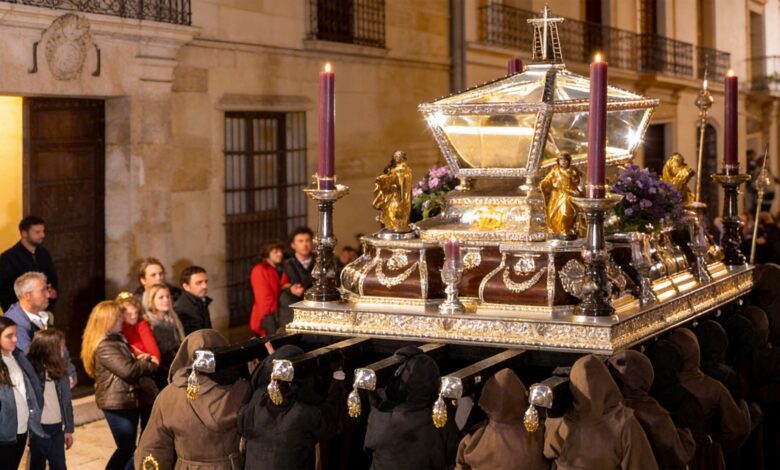
The issue of equal rights in religious organizations has once again come to the forefront after the decision of the brotherhood Nuestro Señor Jesucristo en Su Santo Sepulcro de Aguilar de la Frontera (Córdoba) to uphold the ban on women’s participation. This decision affects not only the local community but the whole of Spain, where gender equality in religious traditions remains a contentious topic and shapes perspectives on cultural heritage.
According to El Pais, the brotherhood, which counts about 120 men, has once again voted against officially admitting women. Women are allowed to be present only in a symbolic status: the organization reserves 12 spots for widows or unmarried daughters of deceased members, but their role is limited and does not confer voting rights or inheritance of positions. The main body of the brotherhood is 72 men, a number that refers to the Gospel story where Christ chooses 72 disciples.
Arguments and traditions
The leadership of the brotherhood explains their stance by pointing to history and tradition. According to them, since its founding in 1804, women have participated in the brotherhood’s life in different ways: they have helped organize processions but were never full members. The bylaws were updated in the 2000s, but discriminatory rules remained unchanged and were approved by the bishop. The head of the brotherhood claims that most women in members’ families do not insist on changes, and an attempt to revise the bylaws in 2024 failed by a narrow margin.
At the same time, critics within the brotherhood and among local women insist on the need for change. They cite Constitutional Court rulings, which have previously declared similar bans as violations of rights to equality and freedom of association. However, despite court decisions, religious organizations continue to invoke freedom of religion and tradition, allowing them to maintain exclusionary practices.
Society and government response
According to El Pais, municipal authorities distance themselves from the conflict, citing the secular status of the state and lack of authority to intervene in religious organizations. Funding for Semana Santa events is provided through a general brotherhood association, not directly. The city mayor emphasizes support for equal rights, but says he cannot influence internal decisions of religious bodies.
In other regions of Spain, similar situations have resulted in harsher consequences. For example, in Sagunto, after women were barred from participating in religious processions, the government began proceedings to strip Semana Santa of its status as a national tourist festival. This demonstrates that public pressure and governmental action can impact religious traditions when they conflict with modern values.
Legal battles and the church’s stance
In recent years, lawsuits over discrimination against women in religious organizations have become more frequent. One of the most high-profile cases involves the Pontificia, Real y Venerable Esclavitud del Santísimo Cristo de La Laguna, where a woman has been contesting a membership ban for over 15 years. The Constitutional Court upheld her arguments; however, the brotherhood and the episcopate appealed the decision to the European Court of Human Rights, claiming that state intervention violates religious freedom.
In some dioceses, such as Sevilla, the archbishop issued a decree as early as 2011 granting full equal rights to all members of brotherhoods, including participation in religious processions. However, such decisions have not become standard across the country. In Córdoba, by contrast, a brotherhood’s bylaws with discriminatory clauses were officially approved by church authorities and remain in effect today.
Context and consequences
Women wishing to participate in religious life face restrictions not only in Córdoba. In most cases, they are only allowed to accompany processions in mourning attire, but not to become full members of brotherhoods or inherit their relatives’ positions. This creates a situation in which tradition stands in the way of equality, despite social and legal changes.
In Spain, debates about the role of women in religious organizations have persisted for many years. According to RUSSPAIN.COM, such conflicts are becoming increasingly visible amid the growing number of women holding key positions in politics and business. For example, a recent move by one of the country’s most influential women, María Jesús Montero, sparked widespread response and became a topic of media discussion— details about her decision and its consequences.
In recent years, Spain has seen a rise in cases where religious organizations revise their statutes under public pressure and court rulings. In some regions, brotherhoods have already allowed women to participate in processions and internal activities, following lengthy negotiations and protests. However, in Andalusia and several other areas, traditional norms still outweigh modern trends. The issue of equality in religious communities remains unresolved and continues to fuel debate at all levels.