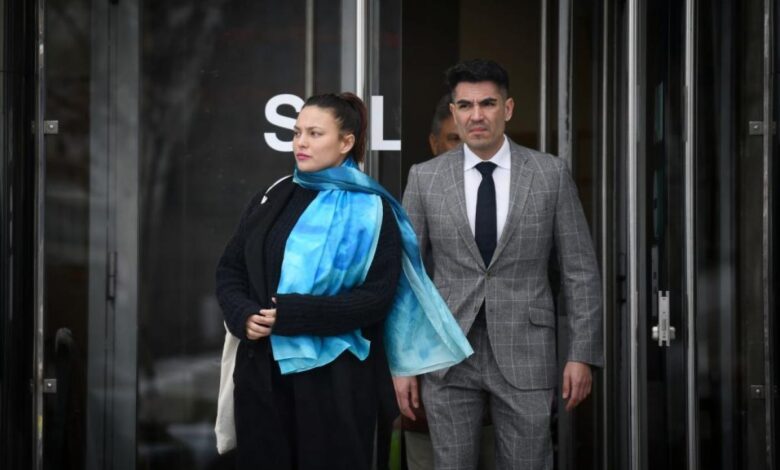
The scandal surrounding allegations against former politician Íñigo Errejón has once again captured the attention of Spanish society. Questions about safety, trust in the judicial system, and support for victims of sexual crimes have grown especially acute after actress Elisa Mouliaá announced her intention to pursue the case in court. Her decision not to withdraw the allegations, despite the public prosecutor’s stance, has sparked renewed debate on how such cases are handled in Spain.
Amidst emotional statements made by Mouliaá outside the Plaza Castilla courthouse in Madrid, where she spoke about the pressure and harassment she has faced, the public is once again discussing how protected those who come forward about violence truly are. The actress emphasized that she does not feel supported and is experiencing a wave of negativity since sharing her story publicly. She urged other potential victims not to remain silent, even if anonymity is necessary, and noted that she is left to fight her battle alone.
Court proceedings
On the same day, Judge Adolfo Carretero suspended the summons of Errejón to court, citing the need for legal clarity. The former deputy’s defense stated that he would not appear until it is clear whether Mouliaá has withdrawn her accusations. However, the actress made it clear that she intends to see the case through, despite the pressure and exhaustion.
The legal proceedings began back in January, when the judge acknowledged indications of a possible sexual offense. According to Muliá, the incident took place after a presentation of Errejón’s book in October 2021. After they went together to a bar and then to a party at an acquaintance’s home, she claims that the former deputy forcibly pulled her into a room, shut the door, and began making advances. The actress maintains that she did not give consent and experienced severe stress following the incident.
Positions of the parties
Later, at Errejón’s apartment, the situation allegedly repeated itself: Muliá felt uncomfortable because of his kisses and touches, and made it clear that consent was essential. She described the former deputy’s reaction as unexpected and distressing. The judge indicated that grounds existed for the accusations to be examined, but the prosecutor took a different view, stating that no crime had been committed. Prosecutors argued that Muliá did not express clear refusal at first, and when she asked him to stop, Errejón complied.
Nevertheless, the actress stands by her account of events and emphasizes the lasting impact. She has spoken about suffering from post-traumatic stress and feeling completely unprotected. In her statements, Muliá notes that the system does not always support victims, and that public opinion often becomes an additional ordeal.
Public outcry
The story has sparked widespread resonance in Spanish media and on social networks. Many are discussing how difficult it is for victims of sexual crimes to achieve justice, especially when the accused is a well-known public figure. There is growing concern in society about how such accusations are handled and how effective the support from state institutions really is.
Muliaá speaks openly about feeling isolated and even considering leaving the country. She emphasizes that no one should have to face such treatment and calls for change in attitudes toward victims. Her story has prompted renewed debates about the need for judicial reform and a shift in public perception of such cases.
Context and similar cases
In recent years, Spain has repeatedly become the stage for high-profile trials related to accusations of sexual crimes. These cases have triggered public outcry, with victims often facing distrust and pressure, and court decisions becoming the subject of fierce debate. One recalls the case of the so-called ‘La Manada’, when the public demanded harsher penalties and a review of approaches to evidence of consent. Such trials often lead to legislative changes and intensify discussions about victims’ rights and the responsibility of the accused. Every new case tests the system and society, revealing how far reforms have gone and where gaps remain.