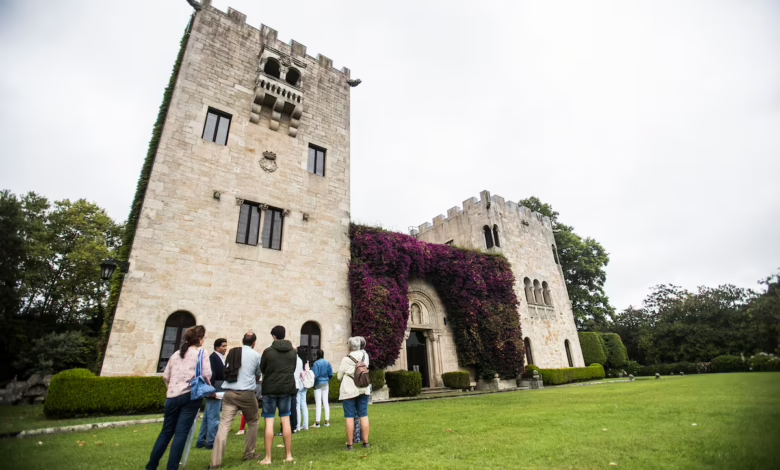
The decision of the Supreme Court of Spain in the Pazo de Meirás case has become a key event for the entire country. The issue of ownership of this historic complex had long sparked debate and public resonance. Now the state has officially become the owner of the property, which could influence the future of other disputed monuments and real estate linked to Spain’s past.
Legal milestone
As noted by El Pais, the judicial panel unanimously ruled that Pazo de Meirás and the surrounding land should pass into state ownership. At the same time, the court recognized the right of Francisco Franco’s heirs to compensation for investments made in the maintenance and repair of the building during their years of residence there. The judges emphasized that the Franco family did not act with the intent to break the law, which served as the basis for the awarded compensation.
This decision put an end to years of confrontation between the state and the descendants of the dictator. The status of Pazo de Meirás had been discussed at various levels, with community organizations and historians repeatedly calling for the property’s return to state ownership. Now that the legal ruling has been made, further disputes on this matter lose their relevance.
Impact on society
The transfer of Pazo de Meirás into state ownership opens up new opportunities for the use of the estate. Authorities may decide to establish a museum, cultural center, or another public space. This could serve as an example for other regions engaged in disputes over the status of historic sites connected to various periods of Spanish history.
There have previously been cases in Spain where the government regained control over monuments with contested ownership histories. Such decisions were often accompanied by public debates and legal proceedings. In the case of Pazo de Meirás, the issue was particularly sensitive due to the site’s symbolic significance for different population groups.
Context and new challenges
The court ruling on Pazo de Meirás may set a precedent for similar cases in the future. In recent years, Spain has seen increased attention to issues of historical memory and rethinking the legacy of the twentieth century. The state is increasingly intervening in disputes over ownership of sites linked to key events of the past.
Against the background of this decision, it is worth noting that the authorities recently implemented an online aggression analysis system to monitor rising hostility in society. More details about this initiative can be found in the article on how Spanish authorities have started using a special tool to track hate levels on social media — details about the launch of the aggression analysis system.
Historical experience
In recent years, Spain has faced a series of high-profile cases involving the return of historic sites to state ownership. In regions like Galicia and Andalusia, there have been debates over the status of castles and estates that belonged to private individuals but hold significant cultural value. In some cases, courts ruled in favor of the state, making it possible to open these sites to the public and use them for educational purposes. These developments highlight a broader trend of rethinking the country’s historical legacy and seeking a balance between private interests and the common good.