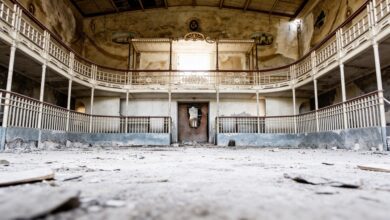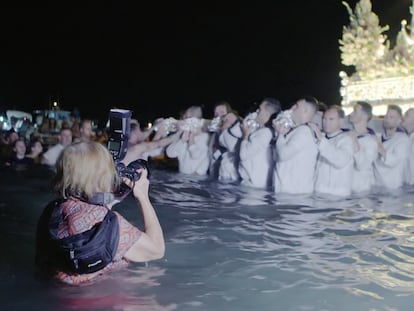
In early December, the Institut Valencià d’Art Modern (IVAM) opened an exhibition by Cristina García Rodero, dedicated to the lesser-known sides of Spanish life. The exhibition, “España oculta,” features photographs taken from 1973 to 1989 and has become a major event for documentary photography enthusiasts. These works not only capture an era of change but also invite viewers to see Spain beyond familiar boundaries and stereotypes.
In the public mind, the 1970s and 1980s are often linked with a surge of freedom, vibrant nightlife, and cultural revolutions like the Movida Madrileña. However, Rodero took a different approach: instead of clubs and discos, she set out deep into the country to capture festivals, rituals, and everyday life in towns and villages. Her lens recorded not only vivid moments, but also subtle details that usually stay behind the scenes.
Living tradition
Rodero’s photographs are more than just chronicles; they’re an attempt to understand how Spain truly changed. Her images show women in black headscarves, children playing among religious statues, and young people participating in street processions. These scenes evoke not so much surprise as recognition: it’s easy to see relatives, neighbors, or even oneself as a child in them.
Many of the people depicted in her work are ordinary individuals who were both participants in new trends and guardians of long-standing traditions. Rodero shows that change does not always happen in the open, and the real life of the country is often hidden behind the façade of fashions and headline-grabbing events. Her Spain is neither exotic nor a relic of the past, but rather an integral part of the shared cultural code.
An Unvarnished Gaze
What makes the exhibition stand out is its honesty and emotional depth. Rodero neither idealizes nor judges her subjects. She captures moments of joy, fatigue, irony, and at times even absurdity. This is the strength of her work: it doesn’t offer ready-made answers, but instead prompts viewers to reflect on their own roots and identity.
The IVAM exhibition has become one of the most visited in recent months. The opening tour filled the hall to capacity, and the gallery spaces continue to attract a steady stream of visitors. The interest in these photographs is driven not only by their artistic merit but also by the way they reconnect viewers with an authentic, unembellished Spain.
Rethinking the Past
The public’s response to the exhibition and the reissue of the book ‘España oculta’ shows that interest in understanding and reassessing the past remains strong. People come to the show not just to see history, but to see themselves—in the faces, gestures, and gazes of Rodero’s subjects. This is not nostalgia, but an attempt to understand how the past shapes the present.
The exhibition will remain open until February 2026, with another guided tour by the author scheduled for late December. For many, this is not only an opportunity to see unique photographs but also a chance to discover a new perspective on their own country. Rodero reminds us that the real Spain is not just found in the chronicles of big cities, but also in quiet celebrations, family traditions, street processions, and the simple joys of life.