In 2026, Semana Santa will once again be a key period for millions in Spain, shaping work, school, and travel schedules. As early as late March, the country starts preparing for large-scale movements, with holidays falling at the beginning of April and their duration varying by region. For many, this is the first major break after the winter holidays, which traditionally leads to a surge in domestic tourism and increased demand for transportation and accommodation.
The official Semana Santa 2026 calendar, published in the BOE, sets the main dates: Jueves Santo falls on April 2, Viernes Santo on April 3, and Domingo de Resurrección on April 5. In several autonomous communities, such as Cataluña, Navarra, and Baleares, the holiday period extends to Lunes de Pascua, April 6. In other regions, like Andalucía or Castilla y León, the break is limited to the traditional days without extending into Monday. This distribution also affects school holidays, which may start from Lunes Santo and finish either on Sunday or Monday, depending on decisions by local authorities.
Lunar cycle and traditions
The reason for the annual shifting of Semana Santa dates goes back to decisions made at the Concilio de Nicea in 325. It was established then that Domingo de Pascua is celebrated on the first Sunday after the full moon following the spring equinox. That is why the holidays can fall on different weeks between March 22 and April 25. This principle still influences school and work schedules, as well as the plans of millions of families and tourists.
The connection between the Christian liturgy and astronomical cycles is no coincidence: the full moon serves as the starting point for calculating all the dates of Semana Santa. This approach not only highlights historical continuity but also creates unique conditions each year for organizing festivities, which is especially evident in the fields of education and tourism.
Regional differences and tourism
In 2026, as before, Viernes Santo will remain a fixed national holiday, while the dates of other holidays will depend on decisions made by the autonomous communities. In some regions, Jueves Santo is replaced by Lunes de Pascua, resulting in an uneven distribution of holidays across the country. This affects the flow of tourists: according to russpain.com, in 2019 the number of trips on the roads exceeded 15 million, and despite changes in the economy and weather, interest in travel during this period remains high.
School closures and favorable weather traditionally contribute to a rise in trips to the coast, countryside, and ski resorts. However, early April can bring unpredictable weather: southern and central regions often face rain, while the north and Canary Islands generally enjoy more stable conditions. Final weather forecasts will only be available a few days before Semana Santa begins.
Holidays and upcoming dates
The duration of school holidays during Semana Santa 2026 will be determined by decisions of the regional education departments. In most cases, the holidays will run from the weekend before Domingo de Ramos through to Domingo de Resurrección, and in regions with an additional day off, until Lunes de Pascua. This approach allows families to plan vacations and trips in advance, while the tourism sector can prepare for the influx of visitors.
For those who like to plan years ahead, the dates for Semana Santa are already set through 2030. In 2027, the holidays will begin on March 21, in 2028 on April 9, in 2029 on March 25, and in 2030 on April 14. These dates make it possible to book tickets and accommodation early and take into account the specifics of regional calendars.
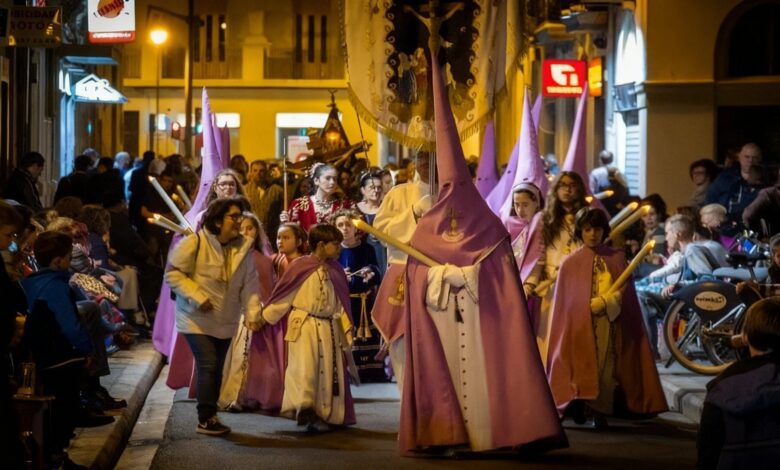
Semana Santa is not only a religious event but also an important social and economic factor for Spain. Every year, millions take part in processions, travel across the country, and use this period to relax. Historically, Semana Santa took shape under the influence of church decisions and astronomical calculations, which still determine its unique place in Spanish life. The holiday unites traditions, family values, and modern trends, remaining one of the most anticipated events of spring.