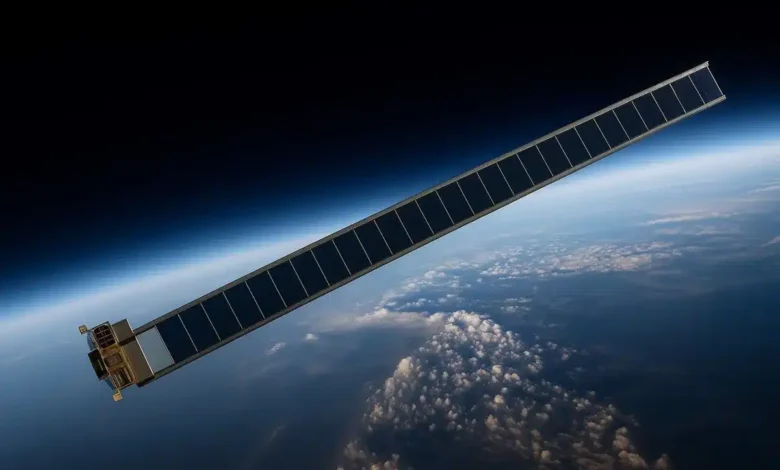
In 2027, Dcubed plans to conduct a unique experiment in orbit: as part of the ARAQYS-D3 mission, the company will test technology for manufacturing solar panels directly in space. To achieve this, a satellite flying alongside other spacecraft on a SpaceX rocket will deploy a thin strip of solar cells and use a special ultraviolet-curing resin to create a rigid support structure in orbit.
The final structure is expected to reach 15 meters in length and deliver about two kilowatts of power. This approach eliminates the need for traditional heavy and complex folding panels designed to withstand launch stresses. In microgravity, lighter materials and simpler mechanisms can be used, significantly reducing the mass and cost of the entire system.
Dcubed relies on standard terrestrial solar cells, which are much cheaper than specialized space-grade alternatives. For small satellites with lifespans of up to five years, these are more than sufficient. This choice reduces the cost per watt to mere tens of dollars, opening new opportunities for commercial missions and scientific projects.
Before the main mission launch, the company will conduct two preliminary technology tests. In 2026, two small devices will be sent into orbit: ARAQYS-D1 will test the printing of a 60-centimeter boom, while ARAQYS-D2 will demonstrate the creation of a one-meter panel on board the Exotrail satellite. These experiments will help ensure the reliability and efficiency of the new method.
According to Dcubed experts, a power level of about two kilowatts is the economically justified threshold for switching to on-orbit solar panel production. This approach could transform how spacecraft are powered in the future, making them lighter, cheaper, and more accessible to a wider range of users.
The ARAQYS-D3 mission will be a significant step forward in the development of space manufacturing technologies and could set a new standard for next-generation satellite power systems.