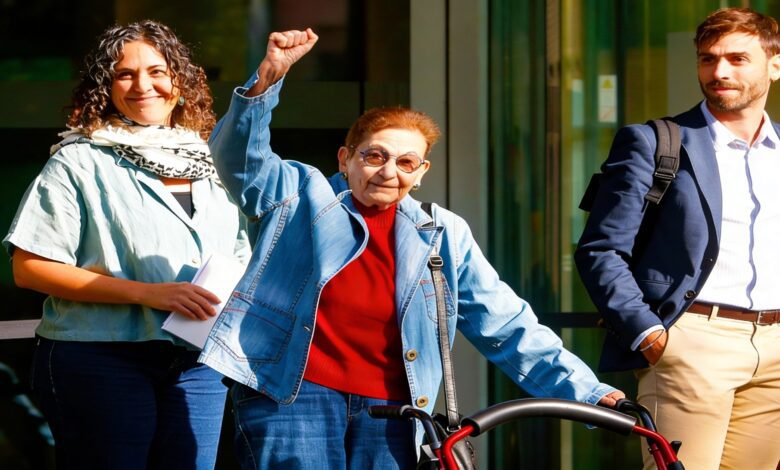
Spain is once again debating the boundaries of historical memory following the death of Blanca Serra, one of the most prominent victims of political repression during the transition era. Her story became an example of how, decades later, the state officially acknowledged the fact of torture for the first time, but was unable to see the investigation through to the end. For many Spaniards, this event highlights how difficult it is to achieve justice in cases connected to the country’s past.
Blanca Serra was detained during Spain’s transition to democracy for her involvement in the Catalan independence movement. At police stations in Barcelona and Madrid, she endured severe torture and humiliation, leaving her with lasting psychological trauma. Despite her age and health issues, Serra took part in protests until her final days outside the former political police headquarters on Via Laietana, demanding that those involved in the violence be named.
Case archive and official acknowledgment
Last year, Serra filed an official complaint about the torture, using the avenues opened up by the new democratic memory law. The law, passed in 2022, allowed victims of repression to seek recognition, truth, and compensation for crimes committed between 1936 and 1978. Prosecutors launched an investigation that, for the first time, documented the torture suffered by Blanca and her sister Eva. However, a year later, the case was closed after authorities were unable to identify those responsible.
The prosecutor’s ruling notes that the actions against Serra occurred amid systematic political repression typical of the Franco regime. Nevertheless, the absence of specific defendants prevented the case from going to trial. Serra was officially recognized as a victim of the regime, but her call for justice remains unanswered.
Memory and calls for change
After the case was closed, Serra sent a letter demanding justice and the creation of a memorial at the former Via Laietana command post. She insisted that the building should serve as a symbol of remembrance, not remain a police station. This idea is supported by many organizations, which continue to advocate for a reevaluation of such sites’ roles in the country’s history.
Òmnium Cultural president Xavier Antich expressed regret over Serra’s death, emphasizing that her life stood as an example of struggle and a reference point for future generations. He also noted that Spain has still not prosecuted those responsible for torture, which continues to frustrate activists and human rights defenders.
Context and consequences
As El Pais reports, the case of Blanca Serra was one of the few where state authorities officially acknowledged the fact of repression but failed to ensure accountability. This again raised the issue of the need to reform approaches to historical memory and responsibility for past crimes. In recent years, debates in Spain have intensified over the future of buildings linked to repressive institutions and how they should be used.
Recalling similar cases, it is worth noting that in 2024 Madrid also debated the issue of renaming streets associated with the Franco regime, while a memorial to victims of political repression was established in Valencia. These initiatives highlight the ongoing relevance of historical justice and its strong public resonance. Across various regions of the country, actions and campaigns continue to push for recognition and compensation for victims of the dictatorship, reflecting society’s deep interest in rethinking the past.