In August last year, a scandal erupted in the Balearic Islands that shocked not only the local police but all of Spain. At the center of the controversy is the former head of the National Police’s anti-narcotics department, who turned out to be a link between law enforcement and one of the region’s most powerful criminal groups.
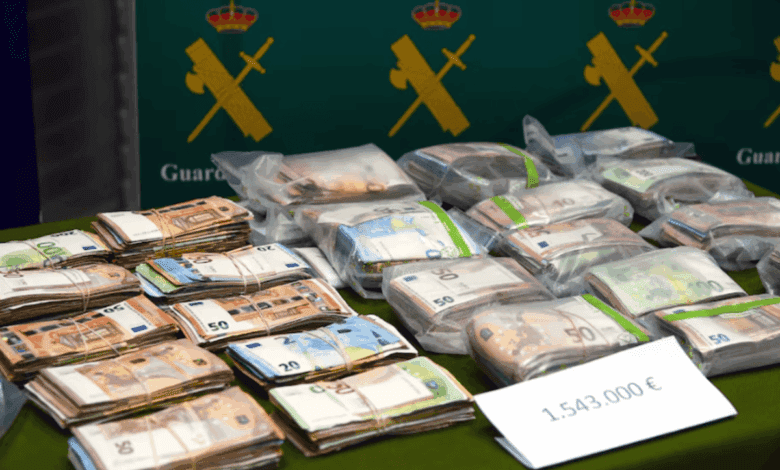
The investigation found that an organization comprised of Spanish and Albanian nationals established large-scale deliveries of cocaine and hashish to Ibiza and Mallorca. Operations were directed by Stefan Milojevic, while strategy and financial flows were controlled by lawyer Gonzalo Márquez. Both were detained and taken into custody back in August, when police carried out a series of raids and seized more than three tons of illicit substances.
The ex-police officer’s role and methods of concealment
Investigators paid particular attention to Faustino Nogales, the former head of the narcotics department. According to the investigation, he was the one who warned the gang leaders about ongoing police operations, allowing them to evade surveillance and upcoming arrests. To pass on information, Nogales used elaborate schemes: he avoided phone calls, relayed messages through his son, and even switched vehicles to avoid being detected.
At some point, he completely cut off contact with the gang members in order not to blow his cover. However, this didn’t save him from arrest—shortly after the main suspects were detained, he too ended up behind bars. Investigators believe it was his actions that accelerated the collapse of the entire criminal scheme.
Attempts to bribe and put pressure on the investigation
The investigation uncovered other alarming details. The criminal network sought to recruit not only police officers, but also members of the judiciary and journalists to obtain insider information and influence the case. According to investigators, lawyer Márquez even tried to organize a smear campaign against one of the lead investigators, linking him to drug traffickers from the Son Banya district in Mallorca.
Legal businesses, including car dealerships registered under front names, were used for money laundering. One of Milojević’s closest associates, Carlos Hervás, was responsible for logistics and provided the group with luxury cars, which were also involved in their financial schemes.
Operation conclusion and regional impact
As a result of the multi-level operation, law enforcement detained 76 people, seized record amounts of drugs, and uncovered a complex money laundering scheme. The case became one of the most high-profile in the history of the Balearic Islands, casting doubt on the effectiveness of anti-narcotics units and sparking debate about police corruption.
The main suspects in the case are currently awaiting trial, and the investigation is ongoing. Authorities have pledged to tighten oversight of law enforcement agencies and step up the fight against organized crime in the islands.