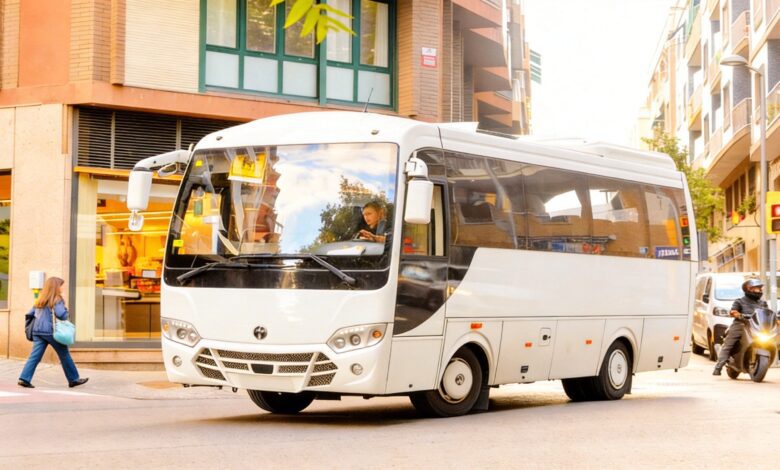
In Catalonia, families raising children with disabilities have unexpectedly faced a serious problem: as of May 7, free school transportation for students attending the specialized Bellaterra school in Cerdanyola del Vallès will be discontinued. This decision impacts several municipalities and jeopardizes access to education for children who require special support. The issue is not just about logistics, but also affects the financial situation of families, who are now forced to tackle daily transportation needs on their own.
Reasons for the cancellation
As reported by El Pais, the Consell Comarcal del Vallès Occidental notified parents that the transportation contract had ended and that it was impossible to find a new carrier. Over the past months, three attempts to hold a tender have failed, even after a 58% budget increase. Officials explain that further extensions are not allowed by law, so transportation will be suspended until the end of the school year. Instead, families were offered financial compensation, but it covers only part of the expenses and does not account for lost income due to the parents’ forced work schedule changes.
The situation is especially challenging for those living in Montcada i Reixac, Ripollet, Rubí, and Sant Cugat. For many, Bellaterra school is the only institution nearby that offers the SIAL program (intensive hearing and speech support). Parents point out that having to drive their children themselves adds to the strain on their already difficult finances, as costs for medical care and therapy for children with disabilities remain high.
Parents’ response and consequences
Parents are concerned that the cancellation of transport infringes on children’s right to accessible education. According to their calculations, the compensation of about six euros per day does not cover the actual costs, including lost work time and additional travel expenses. Some families have already estimated that monthly losses may reach 70–90 euros, which is significant for the household budget, especially considering the specific needs of their children.
Authorities promise that new SIAL centers will open in the Vallès region next academic year, but have yet to specify where and how many there will be. This uncertainty leaves families unsure whether their children can continue studying in familiar conditions or if they will have to seek alternatives.
Context and new challenges
The transport issue for students with special needs is not new to Catalonia. This academic year, Bellaterra school already faced the cancellation of non-mandatory school transport for children living in the same municipality. After legislative changes, municipalities with over 50,000 inhabitants are required to provide public transport, which has led to a reduction in specialized routes for schoolchildren.
According to El Pais, since September, many families have had to arrange transportation on their own, increasing the burden on parents and reducing access to education for children with disabilities. The question remains open: will the authorities be able to find a sustainable solution that takes into account the interests of all parties and ensures equal opportunities for students with special needs?
In recent years, Spain has repeatedly faced challenges organizing school transport for children with disabilities. In 2024, a similar situation occurred in Madrid, where a shortage of carriers left several schools temporarily without specialized routes. Some families received compensation, but many pointed out that it was not enough to cover actual expenses. Similar issues were also reported in Valencia, where parents demanded that authorities review funding policies and look for long-term solutions. These cases highlight that access to education for children with special needs remains a pressing issue that requires a comprehensive approach at both regional and national levels.