Spanish law enforcement carried out a large-scale operation in Castellón that could impact the methods used to combat international drug trafficking. The focus was on a transport company used to move large quantities of illicit substances across Europe. This event raises concerns about the security of logistics routes and highlights the need for stricter controls in the freight sector.
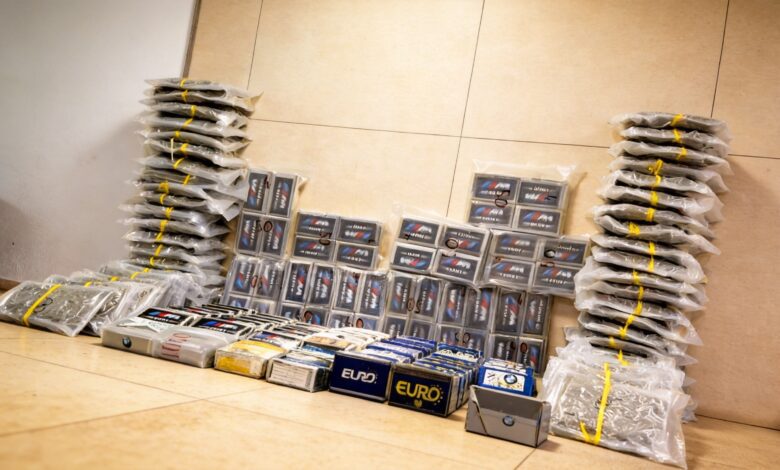
According to El Pais, Guardia Civil officers detained seven people, four of whom have already been placed in pre-trial detention. During searches at the warehouse, authorities found 131 kg of cocaine, 55 kg of vacuum-packed marijuana, and seven vehicles equipped with hidden compartments for transporting drugs. Cash, packing equipment, and documents—which investigators are now examining—were also seized. The operation was conducted by EDOA with support from a unit in Ávila, where suspicious activity related to a possible drug deal was first detected.
Investigation and operation details
The investigation began after EDOA specialists from Avila observed a group of individuals suspected of involvement in illegal trafficking. This led authorities to an organization based in Castellón, which used a transport company as a front for its logistics operations. During further action, police tracked a van moving to a warehouse, where an inspection uncovered cocaine intended for storage on the company’s premises. Four more people engaged in illegal activity were detained inside the building. Later, two additional individuals, who actively assisted the group, were arrested.
All those detained, along with the seized substances and equipment, have been handed over to the court. According to El Pais, the investigation is ongoing, and more suspects may be identified in the near future. This operation is among the most significant in the region in recent months, highlighting the ongoing challenges the issue presents for Spain and Europe.
Scale and consequences
The use of legitimate businesses to mask criminal activities is not new, but such cases prompt a reassessment of standards for screening cargo and transportation. In this case, the transport company provided the criminals with essential resources and infrastructure, allowing them to operate with virtually no suspicion. According to russpain.com, these schemes are becoming increasingly sophisticated, and combating them requires coordination between regions and EU countries.
During the operation, authorities seized not only drugs, but also large sums of cash and equipment used for packaging and transportation. This indicates a high level of organization and technical capability within the group. It is important to note that such investigations often uncover new supply routes and connections between different criminal networks.
Context and emerging challenges
In recent years, Spain has faced a rise in cases where legitimate companies are used for illegal activities. Recently, Cartagena introduced an electric vehicle with an X-ray scanner to inspect luggage on cruise ships—an initiative addressing both security and environmental challenges— details on the implementation of new technologies in ports show how the approach to crime prevention and control is evolving.
According to El Pais, the investigation in Castellón could serve as an example for other regions where transport companies remain a weak link. Focusing on logistics and tightening control over transport operations have become key measures to prevent such schemes. Notably, those detained have already been brought before the court, and further arrests are not ruled out.
In recent years, Spain has become a regular stage for major operations against international drug networks. In 2025, authorities in Malaga shut down a group using yachts to smuggle cocaine from South America. In Valencia in 2024, police uncovered an underground laboratory producing synthetic drugs, resulting in the arrest of more than ten people. These incidents show that criminal organizations are constantly seeking new ways to bypass controls, while law enforcement agencies must adapt to evolving threats. Strengthening cooperation between regions and implementing new technologies are becoming key tools in the fight against such crimes.