The Gaudí Awards 2026 became an event discussed not only within cinematic circles but also among the wider Spanish public. This year’s ceremony stood out not only for the number of awards presented but also for its unusual atmosphere, which immediately sparked a wave of debate. For many Spaniards, these changes in format mean more than just a show: they reflect shifts in cultural policy and approaches to organizing national events.
The main sensation of the evening was the film Sirât, which swept the competition, taking home eight awards. Such success rarely goes unnoticed and always raises questions: what exactly attracted the jury, why did this film find itself at the center of attention, and how will this influence the future of Spanish cinema? However, it wasn’t just the winners who became the topic of conversation—the ceremony itself also provoked much debate.
Music and atmosphere
The musical accompaniment for the evening was top-notch, featuring performances by artists like Arnal, Dausà, Rossell, Sobral, Bonafonte, and Magalí Sare. Their performances set the tone for the entire event, creating the sense of a true musical celebration. However, despite the vibrant acts, many viewers noted that the ceremony fell short of the level of creativity demonstrated at other cultural events in Barcelona.
The organizers decided to avoid the traditional humor that had often been criticized in previous years. Host Joel Díaz allowed himself only subtle irony, which, according to some in the audience, made the evening more restrained but no less intense. The TV broadcast on TV3 was similarly concise: cameras only occasionally showed officials, focusing mainly on the participants and nominees.
Staging and Broadcast
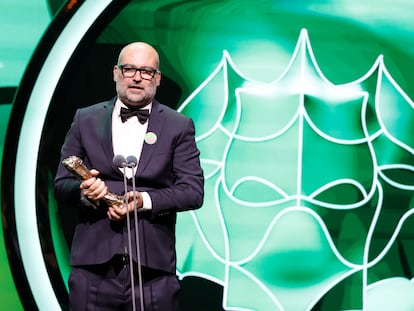
The visual aspect of the ceremony was minimalist. Five hosts took turns on stage, reading texts that aimed for a poetic touch, while the lighting shifted only through basic colors. Throughout the evening, the set design remained unchanged, creating a sense of strict austerity. The only dynamic element was a small camera on rails, offering unusual angles from deep on the stage.
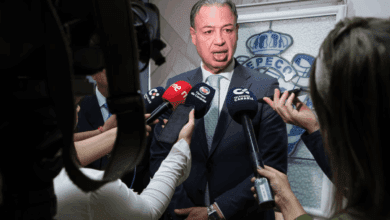
The broadcast began an hour and a half before the official start to show viewers the iconic ‘red carpet’ outside the Liceu theater. Hosts Eloi Vila, Elisenda Carod, Xescu Tapias, and Georgina Arnau took turns conducting brief interviews with guests. The questions were predictable but well-prepared, and the atmosphere was reserved and businesslike.
Unexpected details
This year, the organizers decided to give a voice not only to actors and directors, but also to technical professionals. Particular attention was drawn to an interview with a female sound engineer from the Sirât team, whose group has been nominated for an Oscar for their work in sound. This move is rare for such events and was seen as a sign of recognition for the contributions of all those involved in filmmaking.
Unlike Hollywood ceremonies, there was almost no discussion of outfits or designers. It was only briefly noted that black dominated the guests’ attire. There were no commercials on screen, but the cars with prominent logos delivering guests to the red carpet looked out of place and even somewhat comical. Still, there were no limousines, which gave the event a more modest feel.
Organization and impressions
Despite some minor technical issues with sound, TV3 commentators Carolina Rosich and Ismael Martín handled their roles well, avoiding interruptions and maintaining clear delivery of information. Overall, the ceremony left mixed impressions: on the one hand, the musical elements and honesty in presenting information stood out; on the other, there was a lack of bright moments and unexpected decisions.
The Gaudí Awards are traditionally considered one of the main events in Catalan and Spanish cinema. In recent years, the ceremonies have increasingly become a platform for experimenting with format and content. For example, in 2024 there was an attempt to integrate elements of theatrical performances, while in 2025 the focus shifted to social issues and inclusivity. Each year, organizers seek a balance between tradition and new trends, which consistently sparks debate and discussion in society.