The sudden deterioration of weather conditions in Madrid has become a real challenge for the capital’s residents. Heavy snowfall and gusty winds brought by cyclone Kristin forced city authorities to take emergency measures. For many Madrileños, this means not only restrictions on their usual outings, but also new difficulties getting around the city. The decision to close nine major parks at once, including the popular El Retiro, was an unexpected move that sparked a lively reaction on social media and prompted discussions among locals.
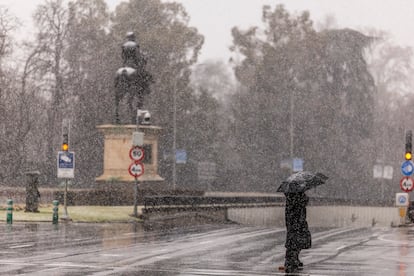
The introduction of an emergency phase under the winter safety plan is more than a formality. It signals that the situation has gone beyond the usual seasonal challenges. Authorities emphasize that such measures are taken only in the face of a serious safety threat, when weather conditions can cause injuries or even more severe consequences. This snowfall turned out to be the heaviest since the famous Filomena, with precipitation levels in some districts exceeding the half-meter mark.
City under snow
Since early morning, Madrid’s municipal services have been working in enhanced mode. More than 5,600 staff members are involved in clearing streets and sidewalks, with equipment deployed across the city to tackle the aftermath of the storm. Special attention is being paid to the districts of Fuencarral-El Pardo, Hortaleza, and Moncloa, where snowfall has been most intense. These areas are seeing the highest drifts, and traffic is hampered not only by snow but also by strong winds.
To prevent icing and injuries on roads and sidewalks across the city, salt is being spread. More than 200 specialized vehicles are working non-stop to minimize risks for pedestrians and drivers. Authorities have opened salt distribution points in all 21 districts of the capital so that residents can treat the areas near their homes on their own. These measures are especially important for the elderly and families with children, who are most affected by icy conditions.
Transport and restrictions
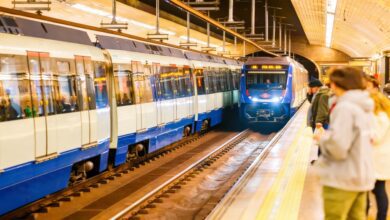
Despite difficult weather conditions, most city buses continue to operate on schedule. Only two lines are an exception, with service temporarily suspended due to road difficulties. There are local incidents reported on the M-30 ring road, especially near the Cuatro Torres tunnel and on the Sinesio Delgado section heading out of the city. Some tunnels are completely closed, and a “black level” hazard warning has been introduced on certain stretches according to the road service classification.
Authorities are urging residents to avoid using private vehicles whenever possible and switch to public transport, as well as to closely follow road status updates. In conditions where even experienced drivers encounter unexpected obstacles, such recommendations are not just advice but a necessity.
Parks closed off
The closure of parks is a measure that has affected not only those who enjoy walks, but also everyone used to spending their free time outdoors. In addition to Retiro, the restrictions also apply to Parque del Oeste, Juan Carlos I, Juan Pablo II, Quinta Fuente del Berro, Quinta de los Molinos, Quinta Torre Arias, and Parque Lineal del Manzanares. The decision to close them was made due to the risk of falling trees and branches caused by wind gusts, which, according to forecasts, may reach up to 70 km/h.
Information about park closures is promptly posted on electronic boards at entrances and in official city service channels. For many residents of the capital, this came as an unpleasant surprise: at the height of winter, parks are a traditional place for walks with children and sports activities. Now, locals will have to look for alternative leisure options, and tourists will need to adjust their plans.
Reaction and outlook
Debate about the necessity of such strict measures is ongoing on social networks. Some believe safety takes precedence over comfort, while others point to insufficient information and inconveniences caused by sudden restrictions. Meanwhile, city services continue to monitor the situation and promise to reopen the parks promptly as weather conditions improve.
For now, Madrid remains on high alert. Residents of the capital are having to adapt to new realities, while public services are operating at full capacity. Meteorologists do not rule out that the bad weather could persist, which means citizens will need to show patience and caution in the coming days.