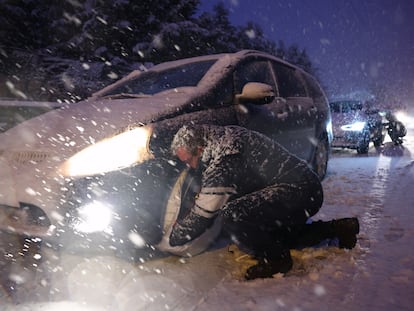
A sudden deterioration in weather conditions in the northern and western districts of Madrid has led to unexpected and extremely strict measures by road services. For thousands of residents in the capital and its suburbs, this not only means sudden changes to their usual routes but also poses a direct threat to road safety. The introduction of the highest danger level on one of the region’s main highways has become an alarming signal for everyone planning to travel these days.
Since early morning, heavy snowfall has completely paralyzed traffic on the section of the A-6 highway from Aravaca to the Madrid exit toward Guadarrama. Authorities have declared the so-called ‘black level’—the highest degree of road danger, under which all types of vehicles are absolutely prohibited from passing. This decision was made due to the inability to guarantee safety, even for cars equipped with winter tires or snow chains.
Restrictions and bans
The situation in neighboring regions is no less tense. In the Segovia area, snowfall has reached such intensity that a ‘red level’ of danger has been declared on the national N-6 road, between El Espinar and Adanero (Ávila), as well as on the AP-61 toll road leading from El Espinar to Madrid. This means that trucks, buses, and articulated vehicles are completely banned from traveling, while passenger cars may only proceed if equipped with winter tires or chains.
Road services warn that the situation may change at any moment and drivers are advised to avoid traveling in these directions. Snowplows will be sent out onto the highways in the coming hours, but no timeline for restoring traffic has been given. According to road authorities, the priority is clearing the A-6, which will remain closed until further notice.
Impact on drivers
The morning hours turned into a real ordeal for motorists. Many found themselves in a difficult situation: on certain sections, traffic came to a near standstill as weather conditions suddenly deteriorated. Despite the challenges, there were no widespread reports of vehicles being stranded on the roads—road crews responded quickly to emerging jams and ensured access for emergency vehicles.
Nevertheless, numerous accidents and traffic jams have already been reported on the M-40 ring road due to slippery roads and poor visibility. Drivers report long delays and having to change routes at the last minute. Under these conditions, even experienced motorists are forced to exercise maximum caution.
Situation in the region
Restrictions remain in place in the vicinity of Segovia and other key routes. On the A-1 highway section from Santo Tomé to El Molar, a ‘yellow danger level’ has been introduced: trucks and articulated vehicles are prohibited from driving, while the speed limit for other vehicles is set at 60 km/h. This decision was made to prevent further accidents and ensure safety amid continued snowfall.
Drivers are advised to closely monitor traffic updates and, if possible, postpone their journeys. Authorities emphasize that the situation remains fluid, and new restrictions may be imposed at any time. For many residents of the region, this has become an unexpected challenge requiring a quick adjustment to the changing conditions.
Expectations and forecasts
While road services are battling the aftermath of the storm, residents of Madrid and the surrounding areas are actively discussing the situation on social networks and messengers. The unusually early and intense snowfall has caused not only a traffic collapse but also anxiety among those caught on the road. In the coming hours, the situation is expected to develop further, and road services continue to operate at full capacity.
As familiar routes become inaccessible and weather conditions continue to worsen, many are asking how quickly traffic can be restored and new incidents prevented. For now, all that remains is to monitor updates and hope for a swift improvement in the situation.