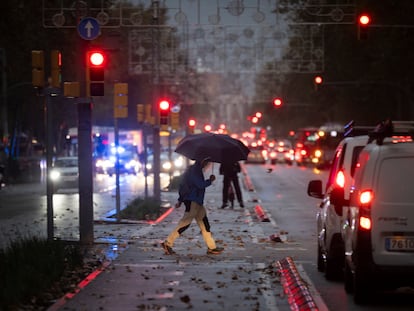
A sharp increase in wind speed in Catalonia has forced regional authorities to take emergency measures that will affect the daily lives of thousands of residents. Starting from midnight on Thursday, all schools, universities, sports clubs, and all medical facilities—except for emergency services—will be completely suspended. The decision comes amid alarming forecasts from meteorologists, who predict two peaks of danger and the highest threat level for most of the region.
Authorities emphasize that the situation calls for maximum caution. Citizens are strongly advised to avoid any travel unless absolutely necessary and, if possible, to switch to remote work. On Thursday morning, wind gusts are expected to reach 30 meters per second, which could lead to serious consequences for infrastructure and safety.
Restrictions and warnings
The decision to suspend operations was made following a meeting of the technical emergency committee, where the latest data from the Catalan meteorological service was discussed. Already this evening, residents will receive an Es-Alert emergency notification on their mobile phones, urging them to limit movement and observe precautionary measures. Authorities also recommend closely monitoring updates in the media and on official channels.
Special attention is being given to safety on the streets and in homes. Residents are advised to keep windows and doors tightly closed, lower the blinds, and remove any items from balconies and windowsills that could be blown away by the wind. Motorcycle and car owners are recommended to avoid leaving their vehicles in open areas whenever possible, and, if necessary, to secure them thoroughly. In Barcelona, all city parks have already been closed, and municipal services have been placed on high alert.
Transport and Infrastructure
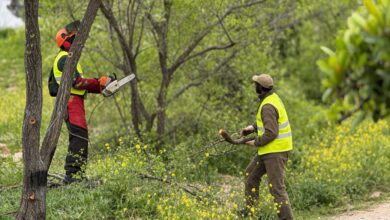
The situation is further complicated by the fact that the region has been experiencing Rodalies rail network disruptions for several weeks. The new wave of bad weather may cause additional delays and restrictions on key routes, particularly on the R1 line between Blanes and Massanet-Massanes, where special crews are already working to prevent falling trees and other incidents. Authorities do not rule out further train service disruptions and urge passengers to plan their journeys in advance.
In recent weeks, Catalans have already faced a series of weather disasters: snowfalls, downpours, and storms have repeatedly brought traffic to a standstill and disrupted daily life. In mid-January, storm Harry brought half a meter of snow to the Pyrenees and caused flooding in Tarragona. In Girona, the Onyar River rose so high that water nearly reached the balconies in the city center. There were traffic jams on the roads, and some sections of the A-2 and AP-2 highways were temporarily closed.
Recommendations for Residents
Municipalities across Catalonia are tightening security measures. In Barcelona, the highest alert level is in effect, and city authorities strongly advise avoiding walks near trees, construction sites, and old buildings. Special attention is given to vulnerable groups—children, the elderly, and people with limited mobility. Residents are advised not only to reinforce their windows but also to remove flower pots from windowsills to prevent injuries to passersby.
Authorities remind the public: even small objects left on balconies can become dangerous projectiles in strong winds. Pet owners are advised not to walk their animals near trees and power lines. In case of emergencies, it is recommended to contact rescue services immediately.
Weather disasters in Spain
In recent years, Spain has increasingly faced extreme weather events, leading to widespread transportation disruptions, school cancellations, and even evacuations. A similar situation recently occurred in Andalucía, where storm Leonardo forced the closure of hundreds of roads and residents had to leave their homes. Read more about the consequences of this storm and the measures taken in the region in the article about mass evacuations and school closures in Andalucía.
The surge in such catastrophic events is prompting authorities across the country to review response protocols and enhance alert systems. Recalling Storm Gloria, which paralyzed the northern regions a few years ago, it becomes clear that timely action and informing the public are crucial to minimizing the impact. Catalonia, like other regions, is having to adapt to new climate risks, which affects the daily lives of millions of Spaniards.