A real drama has unfolded in the European Parliament: an unexpected alliance between Vox, ERC, and Sumar derailed plans to create a European agency to oversee agricultural imports—AgroFrontex. Málaga had been considered as the future headquarters for this body, promising the city not only prestige but also a significant economic boost. Now, after a high-profile vote, the region finds itself sidelined from key European processes, and local farmers are left without the promised protective mechanisms.
The plan was to establish a powerful instrument for monitoring the quality and safety of products coming from outside the European Union. AgroFrontex was to serve as a kind of “customs shield” for European producers, with Málaga becoming a hub for highly qualified professionals and investment. However, political disagreements dashed these prospects literally overnight.
Missed Opportunities
It was expected that hosting the European customs service in Málaga would bring the city around 250 high-paying jobs. Positions were earmarked for experts in law, economics, IT, and management. Economists estimated an annual contribution of tens of millions of euros to the local economy, with even greater indirect effects. Increased demand for services, infrastructure development, and new projects in technology and tourism—all of this is now in doubt.
For Andalusia and all of southern Spain, such a project would be strategic. Málaga has long aspired to become a technology and logistics hub, and the presence of a European institution could cement this image for the city. In addition, hosting the EUCA (European Customs Administration) headquarters would be a symbolic move: until now, Málaga has not had a single major EU or UN institution.
A blow to the agricultural sector
But the impact of the vote goes far beyond a single city. Blocking AgroFrontex has put the reform of the Common Agricultural Policy (PAC)—so anticipated by farmers in Spain and across the EU—at risk. The new agency was intended to strengthen import controls, protect local producers from unfair competition, and enforce sanitary and environmental standards.
Now, with the project stalled, farmers fear their interests will be left unprotected in new trade agreements, especially with giants like the Mercosur countries. European lawmakers who advocated for AgroFrontex have openly expressed their disappointment: they believe the European Commission no longer sees Parliament as a reliable partner and may ignore the agricultural sector’s demands in future deals.
Political disagreements
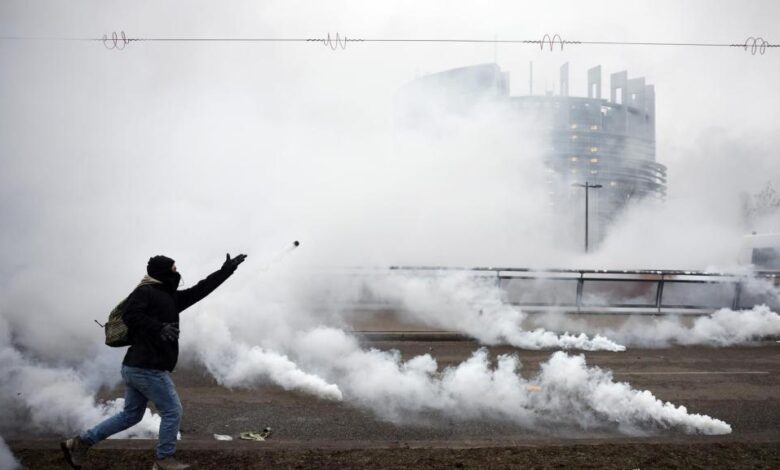
The vote in Strasbourg became an unexpected example of how ideological differences can lead to paradoxical alliances. Vox, ERC, and Sumar—representing opposite ends of the political spectrum—joined forces to oppose the creation of the new structure. Their decision not only sent the Mercosur agreement for review by the EU Court but also blocked key reforms in agricultural policy.
The European People’s Party (EPP) has made no secret of its frustration: negotiations with the European Commission on AgroFrontex and CAP reform were in their final stages. Now, all agreements are at risk. MEPs fear that, in the future, Parliament may be sidelined from making decisions on vital issues such as the agreement with India.
Pressure on the European Commission
Despite the failed vote, EPP representatives plan to continue defending farmers’ interests. They are demanding the European Commission uphold six key conditions, including the automatic introduction of protective measures, stricter phytosanitary controls, more rigorous border and exporter country inspections, as well as a review of environmental standards that, in their view, undermine the competitiveness of European agriculture.
A special place on this list is given to the creation of AgroFrontex. Without this structure, the EPP believes it is impossible to guarantee real protection for European producers. If the European Commission refuses to cooperate, the party threatens to block the final ratification of the agreement with Mercosur, to prevent harm to the EU’s agricultural sector.
Malaga at a Crossroads
The situation in Malaga and all of Andalusia is extremely tense. The city, which has long been building its reputation as the ‘Spanish Silicon Valley,’ now risks missing out on a unique opportunity. Losing hundreds of jobs, millions in investment, and its status as a European hub is too high a price to pay for political maneuvering in Brussels and Strasbourg.
The question of AgroFrontex’s future and the reform of the CAP remains unresolved. But already, it’s clear: decisions made in the European Parliament can instantly change the fate of entire regions and industries. While politicians argue, Spanish farmers and Malaga residents are left watching from the sidelines, losing confidence in European institutions.