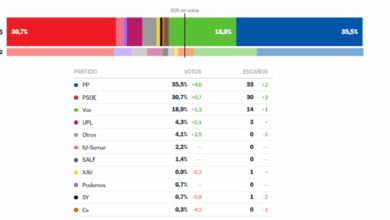
One of the most talked-about election campaigns in recent years is coming to a close in Extremadura. The region is preparing for a vote that many see not just as a local event, but as a kind of bellwether for the country’s political mood. Against a backdrop of economic and social challenges, and with speculation about possible early national elections, attention is focused on the region like never before.
This year, the struggle for power in the autonomous community has taken on particular intensity. Political parties are being forced to respond to challenges shaped not only by local issues, but also by the national crisis. Voters are concerned not just with the region’s future, but also with how its outcome will impact the broader political landscape of Spain.
Strategies and risks
On the eve of the vote, party headquarters are operating at full capacity. Each party is carefully weighing its moves, analyzing not only their own strengths and weaknesses, but also their rivals’ vulnerabilities. The main focus is striking a balance between realism and optimism, between mobilizing supporters and avoiding alienation of undecided voters.
With society weary of uncertainty and ongoing crises, political strategists are forced to seek new approaches. Some rely on traditional values and stability, while others focus on change and renewal. It’s crucial not only to present a convincing platform, but also to effectively communicate it to the public, which is growing increasingly skeptical of political promises.
Position analysis
Experts note that each party has both clear advantages and vulnerabilities. Some enjoy support due to recognizable leaders and established structures, while others benefit from fresh faces and promises of reform. However, in a highly competitive environment, even a minor mistake can prove costly.
Particular attention is paid to how parties respond to external challenges. Economic instability, rising discontent among young people, issues of employment and social support—all these topics are fueling heated debates. It’s important not only to identify the problem, but also to propose realistic solutions.
Opportunities and threats
Among the opportunities opening up for contenders, experts highlight the chance to seize the initiative through unexpected moves or bold statements. However, the risks are just as significant: any careless remark or controversial decision can lead to a loss of public trust.
As voters are increasingly making their decisions at the last minute, parties are forced to remain as flexible as possible. It is entirely possible that the final outcome will depend on who can best adapt to the rapidly changing situation and offer the most convincing response to society’s demands.
The final chord
As election day approaches, the tension continues to mount. Campaign headquarters are filled with anticipation and anxiety—every move, every statement could prove decisive. The line between drama and tragedy for politicians remains blurred, and only the election results will draw that line.