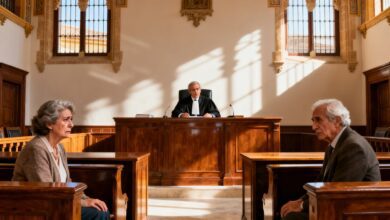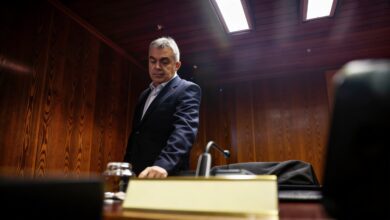
The Supreme Court of Spain has found itself at the center of a heated dispute between experts who have presented starkly conflicting opinions about the authenticity of recordings made by former ministry adviser Koldo García. At hearings on a high-profile case involving alleged fraud in the awarding of government contracts, six specialists—four from the Guardia Civil and two invited by the defense of former PSOE organization secretary Santos Cerdán—presented their conclusions regarding the disputed audio files.
Guardia Civil personnel who conducted a technical analysis of eight audio files claim that no signs of interference or editing were found. According to them, the methods and tools used enabled a thorough examination of the recordings, with no evidence of tampering detected. However, experts hired by Cerdán’s defense insist on the opposite: in their view, without a frame-by-frame analysis, it is impossible to state definitively that the recordings were not altered or edited using external sources.
Investigation details
The question of the authenticity of the audio recordings has become central to the investigation led by Judge Leopoldo Puente. These very recordings formed the basis of the charges against several former high-ranking socialists, including Santos Cerdán and former minister José Luis Ábalos. Cerdán spent five months in pretrial detention, and his defense has questioned the reliability of the evidence from the very beginning.
During the hearing, the judge questioned the experts in detail about the analysis methods they used. Special focus was placed on whether the recordings were made directly on the devices where they were found or if they could have been uploaded from other sources. The possibility that the files had been edited, cut, or spliced was also discussed.
Technological aspects
Two Civil Guard officers acknowledged that, in theory, modern technologies, including artificial intelligence, can facilitate edits to audio files. However, they stated that in this case, no clear evidence of such tampering was found. They emphasized that they worked with the tools available at the time of the examination and found no grounds to consider the recordings to be fake.
At the same time, experts invited by Serdan’s defense argued that without a detailed frame-by-frame analysis, the possibility of editing could not be ruled out. In their view, the absence of such an analysis leaves room for doubt about the authenticity of the audio recordings. They also pointed to the likelihood that the recordings may have been processed, reconstructed, or even created using modern technologies, making it impossible to definitively conclude their originality.
Legal nuances
Judge Leopoldo Puente emphasized the importance of determining whether the conversations were recorded directly on the devices where they were found, or if these were files that could have been transferred from other sources. This issue is fundamental to assessing the evidence in the case concerning alleged fraud in the allocation of government contracts.
As part of a separate episode in the Koldo case, which specifically concerns the audio recordings, not only former politicians but also several entrepreneurs are under investigation, including former executives of the major construction company Acciona. Investigators are trying to determine how reliable the presented audio materials are and whether they can be used as key evidence.
Ongoing dispute
Experts on both sides have maintained their positions, and it is now up to the court to decide whose assessment is more persuasive. The question of whether Koldo García’s recordings are authentic or were manipulated remains unresolved. The final decision on this issue could significantly impact the course of the investigation and the fate of those involved in the case.