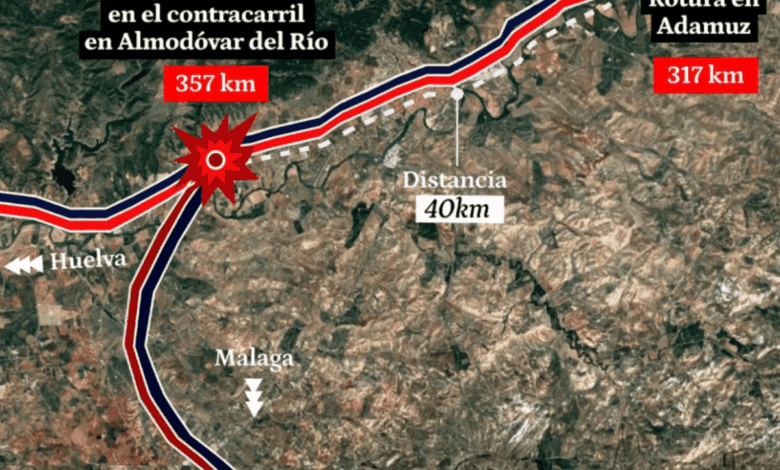
The evening of January 20, 2026, will be forever etched in the memory of Spaniards. On a stretch of railway near Adamuz, one of the most devastating high-speed train disasters in the country’s history unfolded. As a result of the collision between two trains—Alvia and Iryo—at least 43 people lost their lives. Perhaps even more striking, however, were the first moments after the crash: conversations between dispatchers and the crews of both trains, filled with confusion, misunderstanding, and anxiety.
Journalists have obtained recordings of these conversations. They allow us to reconstruct, second by second, how the situation evolved immediately after the tragedy. On air—worried voices, fragmented phrases, desperate attempts to understand what had actually happened. None of the participants yet grasp the scale of the disaster, and information passes between different links in the chain with delay and doesn’t always reach its intended recipients.
At 19:45:02, the driver of the Iryo train contacts the control center at Atocha. He reports a “collision” on the section near Adamuz. The dispatcher asks him to leave a contact phone number and clarifies technical details—background noises reveal emergency braking in progress. The driver says the train is immobilized and cannot move. At this point, no one suspects that what happened was a collision with another train.
The first alerts
Almost simultaneously, at 19:46, the driver of another train—2181—reported problems with the voltage in the overhead lines between Adamuz and Bifurcación Alcolea. The dispatcher asked him to lower the pantographs without providing an explanation. Confusion reigned over the radio: no one connected the technical problems to a possible accident.
At 19:48:39, the dispatcher tried to call the Alvia driver, but he no longer responded—he had died in the collision. A few seconds later, another unsuccessful attempt followed. The dispatcher had no idea that a tragedy had already occurred on the line.
At 19:49:33, after receiving no answer from the driver, the dispatcher contacted the Alvia conductor. The woman replied anxiously: she had a head injury, was bleeding, and wasn’t sure she could reach the driver’s cab. The dispatcher asked her to try to contact him or at least find out what was happening on the train. At that moment, it became clear: the situation was spiraling out of control.
Panic on the line
Almost at the same time, at 19:49:35, the Iryo driver came back on the line, now clearly nervous. He reported that his train had derailed and was blocking the adjacent track. There was alarm in his voice: “We need to stop all train movement immediately!” he insisted. The dispatcher, lacking full information, assured him that there were no other trains on the line and promised to pass on the message.
The driver adds: a fire has broken out in one of the carriages, there are injured passengers, and immediate assistance from firefighters and medics is needed. He reports that he has to leave the cab to check the situation on the train. The dispatcher acknowledges the information and promises to contact emergency services.
At that moment, communication is cut off. Only four minutes have passed since the first distress call, but none of the participants realize the scale of the disaster. The broadcast carries only fragments of panic, attempts to make sense of the chaos, and the first signs of a horrifying tragedy.
The seconds lost
Analysis of the recordings shows that during the first minutes after the accident, none of the dispatchers had a complete understanding of what was happening. Information was not being shared between different parts of the chain, and efforts to clarify details only fueled the chaos. Drivers and conductors were acting blindly, not realizing that the collision had already claimed dozens of lives.
It is especially striking that even after reports of fire and injuries, dispatchers continued to follow standard protocols, failing to switch to emergency measures. Only several minutes later did it become clear: this was the largest railway disaster in recent years.
These conversations reveal the system’s vulnerability, when human error and lack of information lead to fatal delays. The Spanish railway now faces a challenge that could change its approach to safety for many years to come.