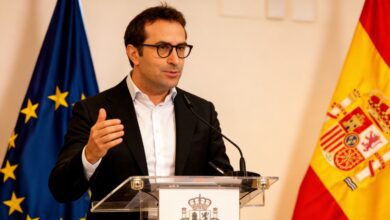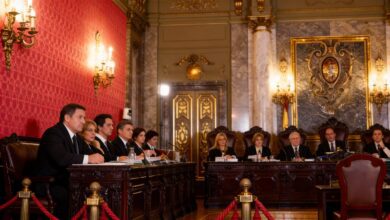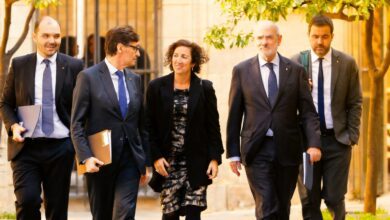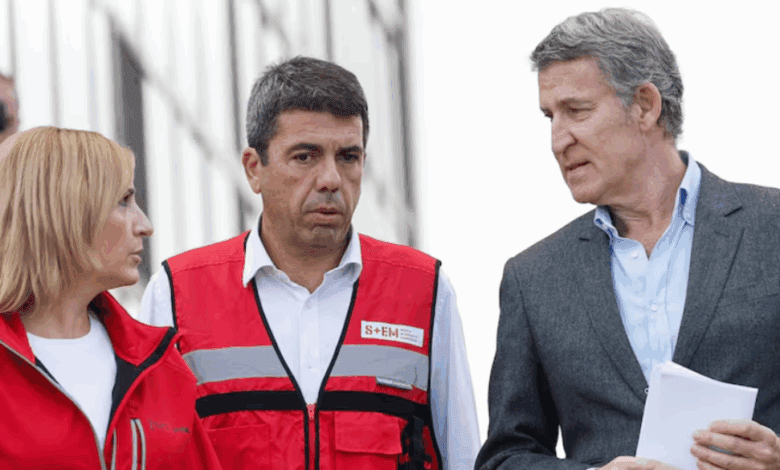
On Friday, at the Catarroja courthouse, Alberto Núñez Feijóo, leader of the Partido Popular, found himself at the center of public attention. He was summoned to testify regarding the large-scale disaster caused by DANA in 2024, which claimed 230 lives. Feijóo appeared via video link, avoiding a physical presence at the courthouse—and, perhaps, additional questions from the press. During the five-hour interrogation, he admitted that at the time of the tragedy he did not receive real-time updates from Carlos Mazón, then the head of the Valencian regional government.
Judge Nuria Ruiz Tobarra questioned Feijóo about how and when he communicated with Mazón that day. Although the politician had previously claimed he was informed about the events from the beginning, his statements now sounded different: “I did not receive any information and I did not request it. The central government did not share any assessments that could have served as a warning.” This admission immediately raised eyebrows among those present.
Message log
Feijóo stated that his first contact with Mazón occurred at 8:59 p.m., after the flooding had already begun. Until then, he was unaware of actions taken by regional authorities or emergency services. His communication with Mazón was limited to WhatsApp messages, and he only briefly mentioned other participants—Emiliano García-Page and Juanma Moreno.
Interestingly, Feijóo was unaware of the existence and work of the Cecopi coordination center, which managed the crisis from L’Eliana. It was from there that the mass Es Alert warning was sent out, but according to the judge, it came too late and was ineffective. Feijóo admitted he did not know where Mazón was at 20:09—two minutes before the alert was issued. He also had no knowledge that Mazón was having dinner with a journalist at that time.
Contradictory Testimonies
The question of the casualties became a central point of the interrogation. Feijóo claimed he first learned about the victims at 23:25, when Mazón wrote to him about the tragedy in Utiel. This contradicts Mazón’s own statements, as he previously insisted he only learned about the fatalities the following day. This discrepancy could play a crucial role in the ongoing investigation.
Feijóo openly admitted that he had never faced a crisis of such magnitude. He cited his experience coordinating the response after the Alvia train accident in 2013 but emphasized that the DANA situation was entirely different. In his view, it was the central government that should have taken the lead in a national emergency.
Internal Disputes
During questioning, Feijóo stated that Mazón informed him about reshuffles in the regional government, which ended with the resignation of former advisor Salomé Pradas, the main figure in the case. He also mentioned that Mazón shared concerns about a possible breach of the Forata dam, which could have caused thousands of deaths. However, according to Feijóo, his correspondence with Mazón was mainly about controlling the information flow, rather than concrete actions to save people.
After the official mourning ceremony, where Mazón faced a hostile reception, Feijóo contacted him again. Mazón then announced his intention to resign, but Feijóo assured the court that he did not influence this decision.
Gaps in communication
The judge, prosecutor, and lawyers questioned not only Feijóo’s personal contacts but also the overall alert system. According to the politician, neither he nor the residents of Valencia received timely updates from national services—neither meteorologists nor hydrologists. In his view, this worsened the disaster’s impact.
Feijóo’s party claims he maintained constant contact with Mazón: on the night of October 29 to 30 alone, they exchanged 23 messages. However, the details of these conversations remain undisclosed, and the court still needs to determine how timely and comprehensive this communication was.
New witnesses
Feijóo’s testimony was the first in a series of interrogations scheduled for 2026. In the coming months, the court plans to hear from about 70 witnesses, including former advisers and fire service leaders involved in managing the aftermath of DANA. Each of them may shed light on how events unfolded during those tragic days.
The DANA case promises to be one of the most high-profile trials of the decade. It is already clear that contradictions in the testimony of key politicians and gaps in public information could lead to unexpected twists. There are more questions than answers, and the public is waiting for the truth to finally come to light.