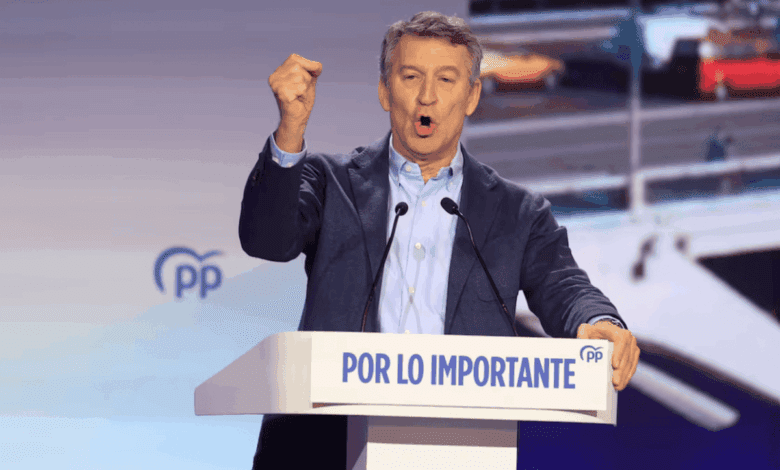
Spanish politics is once again embroiled in debate over the EU-Mercosur agreement. Alberto Núñez Feijóo, leader of the Partido Popular, has unexpectedly demanded that the trade deal not be implemented until additional guarantees are provided for Spanish farmers. His statement came just a day after his party in the European Parliament voted against postponing ratification of the agreement.
Feijóo’s abrupt shift has puzzled even his own supporters. Only yesterday, representatives of the Partido Popular, together with the Socialists, opposed referring legal concerns about Mercosur to the European Court. Now, however, the conservative leader insists that without clear mechanisms to protect Spanish agriculture, the agreement should not take effect. His remarks reflect deep concern for the future of the country’s farming sector, which is already facing difficult times.
Political maneuvering
The situation is further complicated by a recent left-wing initiative in the European Parliament, which has effectively stalled the agreement’s approval. While this is not a complete blockade, only a temporary delay, tensions around Mercosur are mounting. Behind the scenes in Brussels, officials are already discussing the possibility of provisional application of the agreement to bypass the current obstacles.
This entire story is unfolding against the backdrop of upcoming elections in several Spanish regions, where rural voters could play a decisive role. It’s no secret that farmers are the most sensitive to any changes in trade policy, especially when it comes to competition from Latin American producers. Feijóo, apparently, is trying to seize the initiative from his opponents and demonstrate that the interests of the Spanish countryside matter more to him than party discipline.
Opposition pressure
Let’s not forget the influence of Vox, which from the beginning opposed the agreement with Mercosur. Their active campaign is what forced the Partido Popular to take a tougher stance. Internal party disagreements and fears of losing rural support are pushing Feijóo to make bold statements that just recently seemed unthinkable.
However, such political maneuvers are not uncommon in Spanish politics. When thousands of jobs and the fate of entire regions are at stake, even the most principled politicians are willing to reconsider their positions—especially with the threat of electoral losses looming on the horizon.
The Spanish countryside under threat
The agreement with Mercosur promises to create the world’s largest free trade zone, but for Spanish farmers, it sounds more like a death sentence. They fear an influx of cheap Latin American products could push local goods out of the market. Feijóo’s demands for automatic safeguard measures and tighter border controls reflect real concerns among farmers, not just political ambition.
At the same time, the European Union insists on strengthening ties with Latin America, especially amid global geopolitical shifts. Spain, as one of the key players in this process, finds itself caught between a rock and a hard place: on one side stand the interests of farmers, and on the other, Brussels’ strategic priorities.
New rules of the game
While the fate of the agreement remains uncertain, political tensions around Mercosur show no signs of easing. Every new move by Feijóo and his party sparks heated debate in the media and on social networks. Spanish society is divided: some believe defending national agriculture should be a priority, while others see it as nothing more than an election ploy.
One thing is clear: the debate over Mercosur’s future has become a litmus test for Spanish politics as a whole. Whatever the outcome, this story has already shifted the balance of power in the country’s political arena.