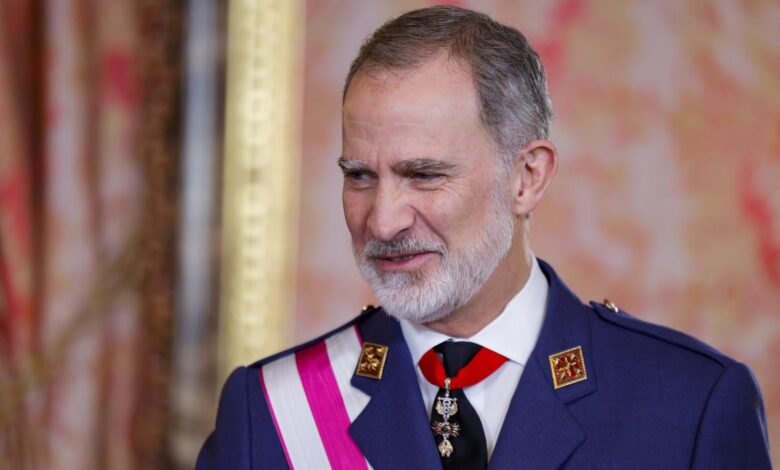
Easter of the Armed Forces 2026 was held in Madrid, in the halls of the Royal Palace—an event that this year was not only ceremonial but also highly symbolic. King Felipe VI addressed the military and civilians, making no mention of Venezuela or the recent headline events, but his speech delivered a clear message: Spain does not intend to deviate from the principles of international law and order. Prime Minister Pedro Sánchez was absent from the hall, and this absence became one of the main topics of conversation among the guests.
As new conflicts shake the world and Europe feels increasing pressure from threats, the Spanish monarch emphasized the importance of adhering to established rules. He noted that 2025 brought not only new challenges but also strengthened the country’s resolve to maintain security and stability. Though he issued no direct criticism or reproach, anyone following events in Venezuela or the actions of the United States could sense the subtext.
Without Sánchez
The absence of the head of government at the ceremony did not go unnoticed. This year, the political break after the New Year holidays ended not with the prime minister, but with Defense Minister Margarita Robles. She assumed the role of the main government spokesperson and emphasized that Spain is a reliable partner, one that not only refrains from imposing its lessons on others, but also does not accept outside lecturing. Robles recalled Spain’s support for Ukraine, calling it a victim of illegal aggression, and called for a just peace to be determined by the Ukrainians themselves.
In her speech, she praised the country’s armed forces, placing particular emphasis on the role of women in the military. The minister made sure to highlight the achievements of Princess Leonor, who she said has become a symbol of a new generation of Spanish military personnel.
Leonor in the spotlight
Although Princess Leonor did not say a word, she was the center of attention. This year marked her first appearance at the Military Easter wearing the formal uniform of the Air Force, as she completed her first year at the Air Force Academy. Her presence was more than merely symbolic—everyone’s eyes were on her, and the subtle exchanges and glances between her and her parents, the King and Queen Letizia, did not go unnoticed.
Infanta Sofía, despite reaching adulthood, did not receive an invitation—the weight of tradition prevailed over change. Leonor, on the other hand, confidently took her place beside her father and mother, exemplifying continuity and the evolving role of women in the military. Her uniform, both strict and elegant, became a symbol of the changes underway in Spanish society.
The King’s Words
Felipe VI did not resort to platitudes. He addressed Leonor directly, acknowledging her achievements and emphasizing that qualities like duty, responsibility, and service shape the moral compass essential to military life. The king expressed gratitude to everyone serving Spain—from military personnel to civilian specialists—and specifically highlighted his daughter’s contribution to strengthening the bond between the monarchy and the armed forces.
His speech included words of appreciation for Queen Letizia, but its main focus was the nation’s future, which, according to the monarch, depends largely on the younger generation and their willingness to embrace responsibility.
Subtle Hints
This time, the Pascua Militar ceremony steered clear of bold statements and direct commentary on international affairs. Nevertheless, attendees’ words and gestures conveyed a sense of tension. Spain, in essence, signaled that it does not intend to stand by as a passive observer in a world where the rules are increasingly being broken. The absence of Sánchez, silence on Venezuela and the US, and the focus on international norms—all suggested a carefully calibrated diplomatic balance.
However, the main figure of the day was Leonor. Her appearance in military uniform, the support from her father and mother, and the words of the Minister of Defense—all of this created the sense that Spain is ready for change but does not intend to abandon its traditions. The Military Easter of 2026 will be remembered not only for the speeches, but also for those who found themselves in the spotlight on this day.