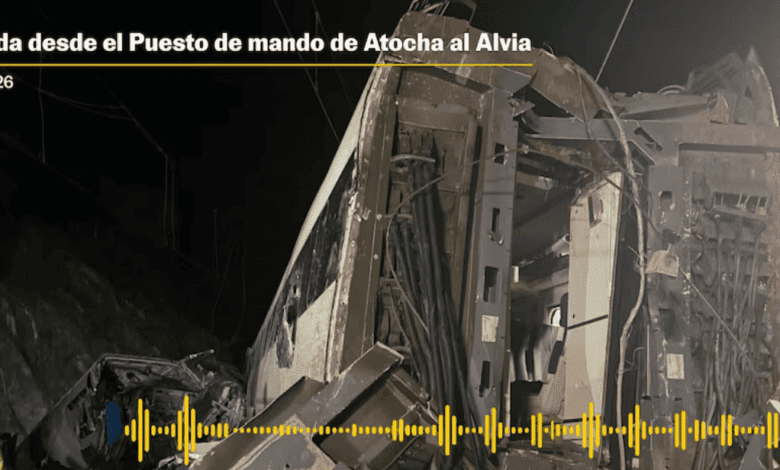
A quiet Sunday evening in Adamuz, Córdoba province, was shattered by a devastating disaster: a high-speed train derailed, plunging the railway into chaos within minutes. Our newsroom has obtained audio recordings of conversations between the Atocha station control center and train staff, offering a first-hand account of the minutes following the crash. These voices reveal confusion, anguish, and desperate attempts to understand what had really happened.
While dispatchers tried to contact the train driver, on the other end of the line was the voice of a female inspector who herself had suffered a head injury. She reported blood and hesitantly promised to try to reach the driver’s cab. At that moment, none of those speaking knew that the driver had already died. To further complicate matters, other simultaneous calls were ongoing—including with the driver of the Iryo train, who was still unaware that a collision had even taken place.
Panic and confusion
In the immediate aftermath of the accident, the Atocha station control center tried to determine what was happening at the scene. They twice called the driver, but received no response. Then they managed to connect with the inspector, who, despite her injury, attempted to assess the situation and locate the driver. Her voice betrayed pain and bewilderment: “My head is bleeding. I’ll try to reach the cab,” she repeated, not knowing the driver would never answer.
Meanwhile, another employee contacted the Iryo train driver, who had not noticed the moment of the collision. He was convinced that everything was fine and even tried to reassure his colleague: “Don’t worry, there’s no one on the tracks.” This phrase, heard over the radio, became a symbol of the complete lack of awareness about the scale of the tragedy.
Lost seconds
In the audio recordings, you can clearly hear employees from different trains and dispatcher posts speaking at the same time, lacking a complete picture of what was happening. Information was not reaching the teams in time, and everyone acted at random. Only after a few minutes did it become clear that the situation was critical: the carriages of one of the trains had ended up on the opposing tracks, posing a risk of further collisions.
At that moment, one of the drivers, realizing the danger, urgently calls to halt traffic on all tracks: “Train movement in this area must be stopped immediately, please.” His voice is anxious yet determined—now no one doubts that a real disaster is unfolding.
Voices of catastrophe
These exchanges are more than just technical details. They are the raw emotions of people caught in the heart of the tragedy. Every word reflects fear, uncertainty, and the effort to remain composed. An interventor, despite being injured, continues to fulfill her duties, while dispatchers try to coordinate actions without full information about the number of victims or the condition of the trains.
What is especially striking is that even several minutes after the accident, none of the participants in the communications seemed to fully grasp the magnitude of what had happened. It was only when it became clear that carriages were blocking oncoming tracks that an urgent evacuation and shutdown were started. But those lost minutes could have cost even more lives.
Aftermath and open questions
The release of these audio recordings raises serious concerns about the readiness of railway services to handle emergencies. Why was there such a delay in communication between trains and the dispatch centers? Why did no one know about the driver’s death in the first minutes? And how could further risks to passengers have been prevented?
The events in Adamuz served as a tragic reminder of how crucial clear and rapid communication is during a crisis. The voices on these audio recordings bear witness not only to pain and fear, but also offer a lesson to the entire railway system of Spain. The accident left even more questions unanswered, and now not only experts, but regular citizens, are searching for answers.