The fate of personal belongings of outstanding artists often becomes a subject of debate and searches, but such discoveries hold special significance for Spain. At the MNAC museum in Catalonia, five laurel leaves that once adorned Marià Fortuny’s head in his final hours have been found nearly a century later. This discovery not only draws renewed attention to one of the most renowned Spanish painters of the 19th century, but also raises questions about the preservation of the country’s cultural heritage.
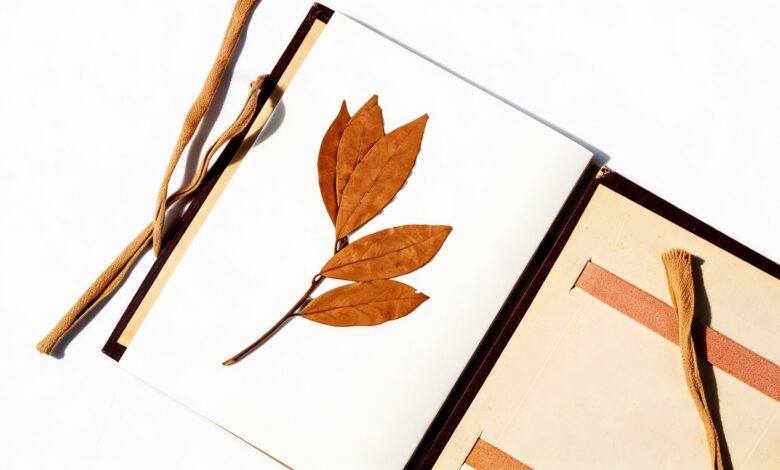
The laurel leaves, remarkably well-preserved, had been stored among the papers in the Ròmul Bosch i Catarineu collection since 1934. They were carefully placed in a drawing folder with a note indicating their origin: these were the laurels that crowned Fortuny on his deathbed in Rome in November 1874. As El Pais reports, the relics were forgotten after part of the collection disappeared during the Civil War, when many works of art and documents were lost or scattered into private hands.
Fortuny’s last days
The death of Marià Fortuny came as a shock to the European art community. Friends and colleagues gathered at his Roman home, Villa Martinori, to say their farewells. Some, like the sculptor Jerónimo Suñol, took a death mask and made a cast of the artist’s hand, while others, such as the painter José Villegas, described the details of the funeral in letters. According to their recollections, the laurel crown was braided from branches picked in Fortuny’s own garden, and it appears in the only known photograph of the artist in his final hour.
This photograph, published in December 1874 in La Ilustración española y americana, became a symbol of farewell to Fortuny. After the funeral, some laurel leaves and a lock of the artist’s hair were distributed among close friends and colleagues. However, the fate of these relics remained unknown for a long time, and the photograph itself disappeared from museum collections during the war and has not been found since.
Lost and Recovered Relics
The Bosch i Catarineu collection, which included more than 2,600 works, arrived at the museum as collateral for a loan to the Bosch textile companies. It featured not only drawings and engravings but also unique items related to Fortuny, including that very photograph and the laurel leaves. In 1938, the album containing these materials was withdrawn for the preparation of a monograph, but after the war its whereabouts became unknown. In 1942, the museum published a list of lost works and appealed to the people of Catalonia to help recover the missing objects. As a result, some drawings were returned, but neither the photograph nor the laurel branch was recovered.
Only decades later did it become clear that the laurel leaves had been in the museum archive all along but were forgotten due to the loss of their inventory number after the photograph went missing. Their discovery was made possible thanks to the meticulous work of MNAC researchers and staff, who continue to study the archival collections. According to RUSSPAIN.COM, such findings highlight the importance of systematic work with museum collections and archives, especially in the context of restoring historical memory.
Significance for Catalan culture
Experts note that the return of the laurel leaves to scholarly circulation not only enriches Fortuny’s biography but also offers a new perspective on the processes of cultural heritage preservation in Spain. MNAC collection director Eduard Vallès emphasizes that the museum’s archive contains not only masterpieces of painting but also items that reveal the everyday side of artists’ lives. Among them are Fortuny’s palette, personal letters, and now the renowned laurel branch.
In 2007, MNAC restoration specialists preserved the leaves by placing them under a protective acetate layer. Despite this, the laurel remained hidden among museum documents until it was rediscovered by researchers. This story highlights how easily unique artifacts can be forgotten, even in the country’s leading cultural institutions.
Context and parallels
In recent years, Catalan museums have increasingly become sites of unexpected discoveries related to art history and artists’ lives. For example, a recent theater premiere in Barcelona sparked interest in lesser-known chapters of the past, while a play about the life of Adrià became a starting point for discussing the role of memory in the region’s culture. Such events underscore that archives and collections can hold not only works of art but also keys to understanding entire eras.
In recent years, forgotten relics linked to prominent figures have been discovered several times in Spain. For example, in 2024, a manuscript believed lost since the 19th century was found in a Madrid museum. In 2025, restorers in Barcelona uncovered fragments of an old fresco hidden behind a gallery wall. These cases show that even decades later, archives can reveal surprises that reshape the country’s understanding of its past.