The aftermath of the powerful Leonardo cyclone proved to be a real test for residents of southern Spain. In a matter of hours, everyday life was upended: streets turned into rivers and roads became dangerous traps. For many families, these events led to forced evacuations and nights spent in sports halls. The situation in Andalusia clearly showed just how vulnerable even major cities remain in the face of natural disasters.
Flooded cities
In the province of Cádiz, the consequences of the heavy rains are felt most acutely. In Jerez de la Frontera, Guardia Civil officers use motorboats to patrol areas where the Guadalete River has overflowed its banks. Locals watch as familiar streets disappear under muddy torrents and cars are left half-submerged. In Grazalema, the situation is no less tense: people hurry along flooded sidewalks, helping the elderly and those unable to get out of danger on their own.
In some areas, the water rose so quickly to people’s homes that they had no time to gather their belongings. Authorities set up temporary shelters for evacuees to protect them from the risks of further flooding. The atmosphere in these places is tense—many don’t know when they will be able to return home or what condition their property will be in.
Roads under water
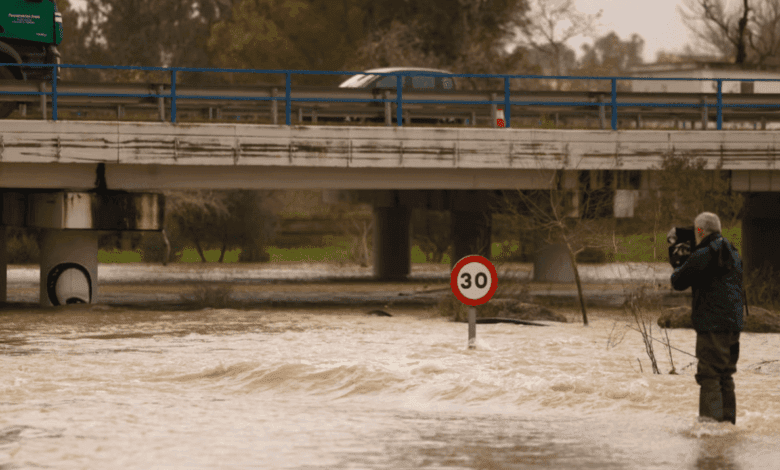
The transport infrastructure has proven to be one of the most vulnerable aspects in this situation. The CA-9209 road between Algeciras and Los Barrios is completely closed due to the overflow of the Palmones River. Drivers are forced to look for alternative routes, and some vehicles have become stuck in the water. Traffic in the Campo de Gibraltar area is nearly paralyzed, complicating the work of emergency services.
In Málaga, the Teba and Guadalhorce rivers have overflowed, leading to the closure of several roads, including the MA-224 in Villanueva del Rosario. Local residents say they haven’t seen such severe weather in many years. Some road sections have turned into raging streams, while road services are working around the clock to minimize damage and restore traffic.
Evacuation and Assistance
In Algeciras, dozens of families were forced to leave their homes due to the threat of flooding. Sports halls were opened for them, where they spent the night waiting for the situation to improve. Volunteers and rescue workers are helping the evacuees, providing them with everything they need. In some cases, neighbors join forces to help each other get out of dangerous areas, especially those who cannot move on their own.
Authorities warn of possible new flooding and urge residents to exercise caution. Patrols have been organized in some towns to monitor water levels and respond promptly to any changes. Despite the challenging situation, many note a high level of solidarity and mutual assistance among local residents.
Consequences for the region
The disaster has caused major damage to infrastructure and private property. In some areas, water has entered homes, destroyed gardens, and damaged vehicles. Authorities have already begun to assess the damage and plan to allocate funds for the recovery of affected areas. It is expected that eliminating the consequences will take more than a week.
Meteorologists warn that such events may become more frequent due to climate change. Residents of southern Spain are increasingly facing extreme weather conditions, which calls for new approaches to urban infrastructure and alert systems.
In recent years, Spain has repeatedly faced devastating floods. In 2023, heavy rains in Murcia and Valencia led to mass evacuations and significant losses. Many roads and railway lines were submerged, and it took months to restore the infrastructure. Such events highlight the ongoing need to improve warning systems and emergency preparedness. Authorities and residents are compelled to seek new solutions to minimize the impact of future disasters.