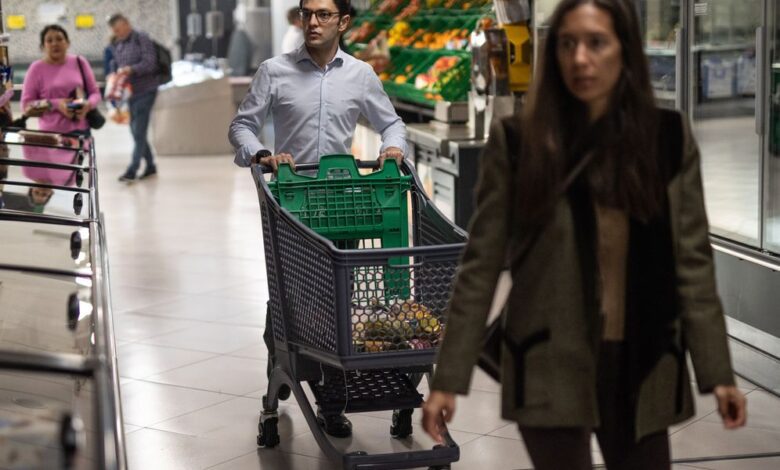
In 2025, Spaniards faced yet another wave of rising food prices, which many hoped would slow after previous years’ sharp increases. But reality proved different: in some regions, the cost of a basic grocery basket climbed much higher than elsewhere. Residents of Castilla y León felt this especially, as price growth there was among the highest in the country.
While official December statistics are yet to be released, it’s already clear: Castilla y León ranks among the top three regions for food price hikes, surpassed only by Ceuta and Asturias. Here, food and non-alcoholic beverages rose by 3.2% over the year, compared to the national average of 2.8%. For many families, this became a real challenge, as even a slight increase in basic food prices immediately impacts the household budget.
Geography of price increases
The variation in prices across Spanish regions in 2025 was quite noticeable. While Castilla y León, Asturias, and Ceuta saw the steepest rises, the situation was much calmer in Murcia, Castilla-La Mancha, and Melilla, where price growth did not exceed 2.2%. This contrast led many to reflect on what drives these differences and how regional factors shape the cost of living.
However, it’s not just your place of residence that determines how hard rising prices will hit your wallet. The structure of consumption also matters: which products fill your basket most often, how preferences change, and how flexibly local markets respond to external challenges. In Castilla y León, where consumption of local products has always been high, price increases for selected categories have been especially noticeable.
Top price hikes
Some products saw prices literally skyrocket in 2025. Egg prices jumped over 30% year-on-year—and that’s no exaggeration. For many families, eggs have almost become a luxury, forcing them to replace familiar dishes with more affordable options. Beef prices rose by 18%, while coffee, cocoa, and tea jumped nearly 15%. Even fish, traditionally considered a staple of the Mediterranean diet, became 7.5% more expensive.
The fast food sector hasn’t been spared by inflation either. Over the past five years, fast food prices have climbed by a third, and in 2025 alone—by 4.3%. Spaniards, used to convenience and speed, are having to rethink their eating habits. Still, not everyone is ready to give up their favorite burgers and pizza, even with higher prices.
Restaurants and cafés
The food service sector has also felt the impact. In 2025, prices in restaurants, cafés, and even dance venues have risen by 4% since the start of the year and by 4.2% year-on-year. This outpaces the average rise in food prices. Business owners admit that inflation and rising costs are forcing them to raise prices, but profits are still falling. Over the past year, business profitability has dropped by almost 1%—despite total revenue increasing by 3.1%.
Festive December—when Spaniards traditionally spend more dining out—might still correct the final figures. But it is already clear that a dinner out or a cup of coffee at a favorite bar has become less affordable for many. What was once a part of daily routine is now more of an exception than the rule.
Consumer habits
Rising prices have forced Spaniards to rethink their consumer habits. More and more often, shoppers can be heard discussing ways to save on groceries at supermarket checkouts—which products can be replaced with cheaper alternatives, or what to give up altogether. In Castilla y León, where family values and loyalty to local products are especially strong, these changes are felt particularly acutely.
Many residents admit they have to hunt for discounts, buy products in bulk, or even team up with neighbors for group purchases. Some are going back to home cooking to cut down on spending on fast food and restaurants. But there are also those who have no choice but to reduce their diet, giving up familiar treats.
Looking ahead
While experts debate the reasons behind such a sharp rise in prices specifically in Castilla y León, locals have already adapted to the new reality. For many families, 2025 has become a year of forced austerity and the search for new survival strategies. And although the official data for December is still to come, few believe it will bring good news.
Still, Spaniards are not prone to despair. Even as prices rise, they find ways to maintain their usual standard of living, albeit with some adjustments. The question remains—how long can they stay afloat as costs continue to climb?