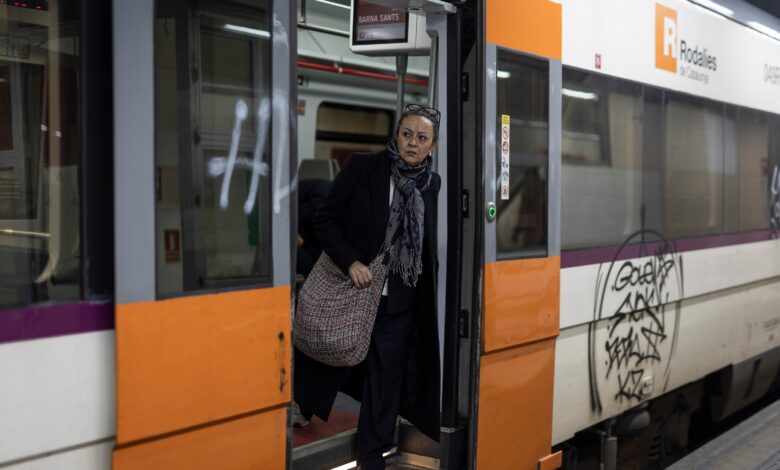
The decision to extend free travel on Rodalies until the end of March was a necessary measure amid the ongoing transport crisis in Catalonia. For local residents, this means that daily commutes on suburban trains will remain free of charge, despite ongoing disruptions and restrictions. Authorities hope that this support will help alleviate the impact on passengers while the infrastructure remains vulnerable.
The situation on Catalonia’s railways has remained tense since January, when a crash in Gelida resulted in the death of a train driver and emergency safety measures were introduced. Since then, Rodalies has faced regular disruptions, delays, and forced schedule changes. As El Pais notes, major works in the Garraf tunnels will add to existing problems, starting this coming Monday. These works will last three months and affect the southern rail corridor, leading to significant traffic restrictions on this section.
Restrictions and alternatives
On Wednesday, passengers on the R3 line once again faced disruptions: after partial service was restored in the morning, a section between Sant Martí de Centelles and Figaró was blocked in the afternoon due to a large object on the tracks. According to El Pais, Renfe quickly arranged bus services to cover the affected stretch. Such incidents have become common for Catalonia’s railways, where safety and reliability remain in question.
The Catalan authorities emphasize that the only way to resolve the transport crisis is through large-scale investment in infrastructure, upgrading rolling stock, and transferring control of Rodalies to the Generalitat. According to government representatives, there is no alternative to the current situation, and the commitment to decentralize the rail service remains unchanged.
Impact on passengers
Rodalies passengers have already become accustomed to constant route changes, delays, and the need to seek alternative ways of traveling. The situation is especially acute on southern routes, where works in the Garraf tunnels will cause further inconvenience. Looking back at recent events, it is worth noting that strong winds previously paralyzed traffic between Valencia and Catalonia, when Renfe had to cancel services and allow free ticket refunds — details about that incident are available here.
According to El Pais, despite temporary support measures, local residents continue to face uncertainty and have to adapt to new conditions. The authorities have promised to speed up the process of transferring control of Rodalies to the Generalitat, but the timeline and details of this transition remain unclear.
Context and recent developments
In recent years, Catalonia’s railway system has repeatedly come under scrutiny due to accidents, technical failures, and severe weather events. In 2025, heavy rains led to the suspension of traffic on several lines, while in 2024, strikes by train drivers forced thousands of passengers to seek alternative routes. Each new incident highlights the urgent need to modernize infrastructure and overhaul the region’s rail management system. The transfer of Rodalies to the Generalitat has been under discussion for years, but only a series of crises pushed authorities to accelerate the process. For now, passengers must rely on temporary solutions and hope for swift change.