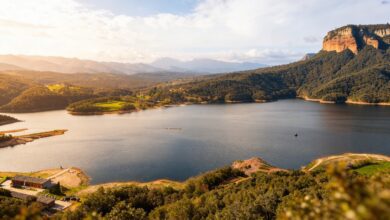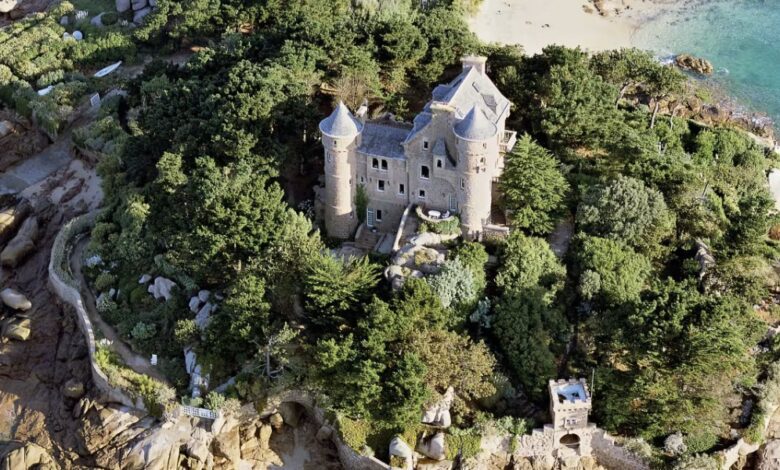
An exceptionally exclusive offering has emerged in the luxury real estate market: for the first time in 37 years, a private island in northern France is up for sale. Priced at €9.5 million, this secluded haven’s main jewel is a majestic neo-Gothic castle built from the region’s renowned pink granite. Situated off the Côte de Granit Rose, this property has long been one of the most photographed and recognized landmarks of the area.
Covering nearly one hectare, the island is a true oasis. Its meticulously landscaped gardens boast more than two hundred species of trees and flowers, creating a unique atmosphere of tranquility. In addition, owners have access to two private sandy beaches with shallow waters—perfect for relaxing and swimming in crystal-clear seas.
This place is imbued not only with natural beauty, but also with a rich history closely tied to world literature. It was here that a distinguished writer, whose name is forever etched in the annals of global culture, found inspiration and created his works.
A castle with history
The majestic structure was built in 1892, designed by Bruno Abdank-Abakanowicz, a talented engineer and mathematician of Lithuanian-Polish descent. The castle, constructed in the Neo-Gothic style, impresses with its twin towers, elegant arched windows, and a romantic aura reminiscent of medieval fortresses. Unique pink granite quarried locally was used in the construction, giving the building its distinctive charm and color.
One of the castle’s most famous guests was Henryk Sienkiewicz, the future Nobel Prize winner for Literature in 1905. It was within these very walls, surrounded by inspiring landscapes, that he wrote his most celebrated novel, “Quo Vadis,” published in 1895, which brought him worldwide fame. The writer’s stay on the island left an indelible mark on this place’s history, turning it into a literary shrine.
Luxury and Seclusion
The castle’s interior lives up to its imposing exterior. Owners can enjoy five spacious bedrooms, several reception halls, and an impressive knight’s hall featuring a grand fireplace and elegant parquet floors. The expansive living room offers direct access to sunlit terraces with breathtaking views of the sea and surrounding landscape.
Despite its historic exterior, the castle is fully equipped with all modern amenities for comfortable living. Residents can enjoy a private sauna, a fitness room to stay in shape, and even a home theater for movie nights. Of special note is the enclosed observation deck, offering panoramic sea views in any weather, as well as an outdoor pool with a wooden deck that becomes the focal point on warm days.
Nature and accessibility
What makes this offer unique is the combination of absolute privacy with convenient access. The island is connected to the main electricity and water supply networks, eliminating many of the everyday challenges typical of isolated properties. There are several ways to reach the mainland: during low tide you can drive over in an SUV, and at medium or high tide—a boat is required.
For owners of watercraft, the island has its own dock and two slipways for small vessels. The nearest populated area is the picturesque port village of Ploumanac’h in the Trégastel commune, renowned for its pink granite cliffs and unique scenery. This location presents a rare opportunity to own not just real estate, but a piece of history with a literary legacy.
Incidentally, Henryk Sienkiewicz (1846–1916) is one of the most renowned Polish writers of the late 19th and early 20th centuries. His historical novels, translated into dozens of languages, brought him international acclaim. In 1905, he was awarded the Nobel Prize in Literature “for his outstanding merits as an epic writer.” His novel “Quo Vadis,” written on the island, tells of the reign of Emperor Nero and the rise of Christianity in Rome. This work has been adapted for film many times and remains immensely popular with readers worldwide to this day. Sienkiewicz’s work has had a significant impact on the development of the historical novel as a genre.