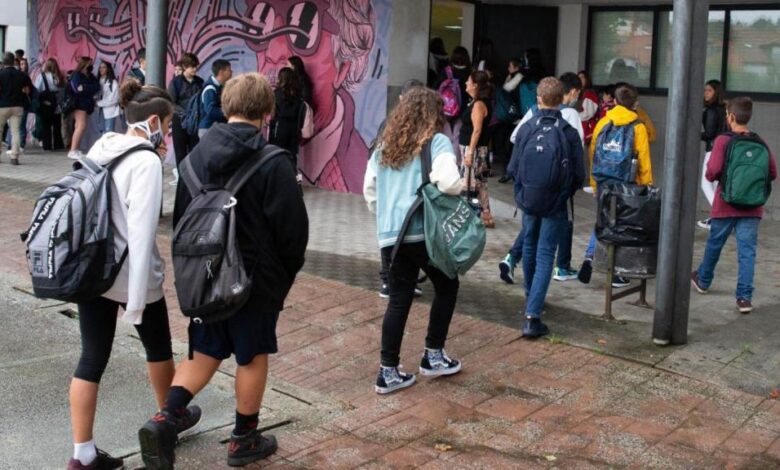
Something is happening in Galicia that’s making even the most skeptical parents rethink things: in rural schools where English was recently considered exotic, children now chat freely with foreigners. In the mountains, hundreds of kilometers from the nearest city, students discuss the weather and their favorite movies in Shakespeare’s language. And this is no longer an isolated case, but a new reality in a region that for the second year in a row ranks first in the country for English proficiency.
At the heart of this phenomenon is an unusual education system where three languages carry equal weight. Galician, Spanish, and English each share school hours equally at 33%. According to local officials, this approach has become not just an experiment but a real revolution for schools. As a result, international studies show that Galicia confidently surpasses not only its neighbors but also major cities like Madrid and Barcelona.
Three languages — one school
The introduction of the trilingual model started with volunteers, but quickly became widespread. Teachers and parents noticed: children not only don’t mix up the languages, but actually begin to understand their native, state, and foreign languages even better. In elementary grades, some subjects are taught in Galician, others in Spanish, and still others in English. In secondary school, the distribution is maintained, but schools decide for themselves which language to use for specific subjects, with the main requirement being to keep the hours balanced.
Today, more than half the region’s schools operate under this model. About 150,000 students switch between three languages daily—a routine that has become the norm. Authorities insist this approach has not weakened the positions of Galician and Spanish; on the contrary, it has improved literacy across all areas. In national tests, Galicia consistently ranks among the top three in reading and text comprehension.
Foreigners in the Village
Foreign language assistants play a key role in the region’s success. Nearly 700 young people from countries ranging from the US to India work in 791 schools, including those in the most remote villages. For many students, meeting a native speaker was their first real step toward mastering English. Today, rural classrooms echo with not only Galician accents, but also with American and British ones.
The program began with just a few dozen assistants but quickly expanded. Regional authorities admit that substantial funds are allocated to this initiative—because the results speak for themselves. Still, not everyone is pleased. Some officials in Madrid believe bureaucratic hurdles could threaten the system’s future development. In Galicia, there are concerns that intervention from the capital could upset a unique balance.
Equal Opportunities
Trilingual education in Galicia begins in kindergarten and continues all the way to vocational studies. Even in colleges and adult education courses, some subjects are taught in English. The region was the first in the country to introduce foreign language modules into its vocational training system, and now other autonomous communities are showing interest in this experience.
One key feature is free language proficiency exams offered directly in schools. This allows graduates to obtain an official certificate at no extra cost, which is especially important for low-income families. Additionally, the Galemundo exchange program lets thousands of students and teachers travel abroad each year for language practice.
Leaders without compromise
The latest international ranking once again placed Galicia at the top for English proficiency among all Spanish regions. The cities of Vigo and A Coruña also ranked among the best in the country. Local officials insist this is no accident, but rather the result of fifteen years of effort and a firm principle—languages should not be set in opposition, but given equal rights. As a result, English has reached even the remotest corners of the region, and schoolchildren from mountain villages can now astonish any tourist with their pronunciation.
However, behind the scenes of this success story, not everything is so smooth. Regional authorities worry that new rules and bureaucracy from the central government could disrupt the established system. Parents and teachers are watching developments with concern—for what’s at stake is not just rankings, but the future of an entire generation.