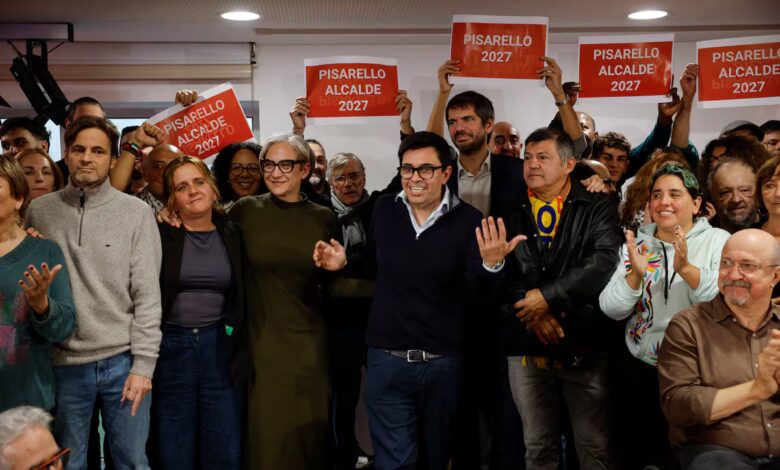
Gerardo Pisarello, a Spanish Congress deputy and former Barcelona city councilor, has officially announced his candidacy in the Barcelona en comú primaries. He aims to lead the party’s list in the 2027 municipal elections. Presenting his candidacy, Pisarello was joined by former mayor Ada Colau, culture minister Ernest Urtasun, as well as key movement founders and members of the city’s first administration.
Pisarello emphasized his goal to become Barcelona’s first mayor with a migrant background, while also expressing pride in his Catalan and Latin American roots. In his speech, he noted that he draws inspiration from Montserrat Roig, Maria Mercè Marçal, and the young Yammin Lamal. According to him, Barcelona can become a symbol of hope and justice in challenging times.
Internal party dynamics
Tensions have been rising within Barcelona en comú in recent weeks. The recent elections to the party’s executive body and the unexpected decision of well-known journalist Bob Pop to run in the primaries have contributed to this. Pisarello decided not to delay the announcement of his candidacy, aiming to clearly state his position and win the support of the movement’s founders.
It has not yet been disclosed who will be his running mate in the number two spot on the electoral list. Pisarello assured that, if victorious, he is ready to work alongside Bob Pop, counting on his active involvement in the campaign. Meanwhile, writer and critic Bob Pop continues to meet with party activists and supporters, joined by representatives from the party’s second tier.
Electoral process
At the most recent plenary session, Barcelona en comú approved the primary regulations. Under the new rules, the top five spots on the list are formed as follows: the list leaders select the third, fourth, and fifth candidates, while candidates for positions six through fifteen are chosen by open voting. Party members acknowledge that this approach carries certain risks, but they hope to finalize the list in the first quarter of next year.
Pisarello announced his candidacy at the Ca l’Isidret center in the Sant Martí district. In his speech, he addressed residents struggling to pay rent and pledged to fight so that life in Barcelona does not become a privilege for the few. He once again raised the idea of creating a broad left-wing front with the participation of unions, business, and other political forces, but chose not to answer a question about a possible departure from the Barcelona en comú brand.
Colleagues’ reaction
Ada Colau, former mayor of Barcelona, expressed confidence that Pisarello is exactly the person the city needs right now. She emphasized that they are united not only by years of working together, but also by a personal friendship. Ernest Urtasun also backed Pisarello, expressing hope for a return to people-oriented politics, as was the case during the years of Barcelona en comú’s leadership.
At the same time, tensions remain within the party. The reasons lie not only in disagreements between the activist wing and former ICV members, but also in frustration over the ongoing practice of appointing leaders without broad discussion. Additional discontent was sparked by Colau’s delay in announcing her plans, which many believe slowed preparations for the new elections.
Internal divisions
Pisarello’s leadership style has also raised questions among some party members. His decision to announce his candidacy on the same day that the leader of the city council faction, Janet Sanz, announced her departure, was met with mixed reactions. During the recent executive committee elections, Pisarello’s supporters failed to achieve significant success despite the official slate’s victory. Sanz was absent from the candidate presentation, but about fifteen founding members of the movement and members of the first city government, including Jaume Asens, Gemma Tarafa, Eloi Badia, Jordi Molina, Josep Maria Montaner, Ancor Mesa, Marc Serra, and Jordi Ayala, did attend the event.