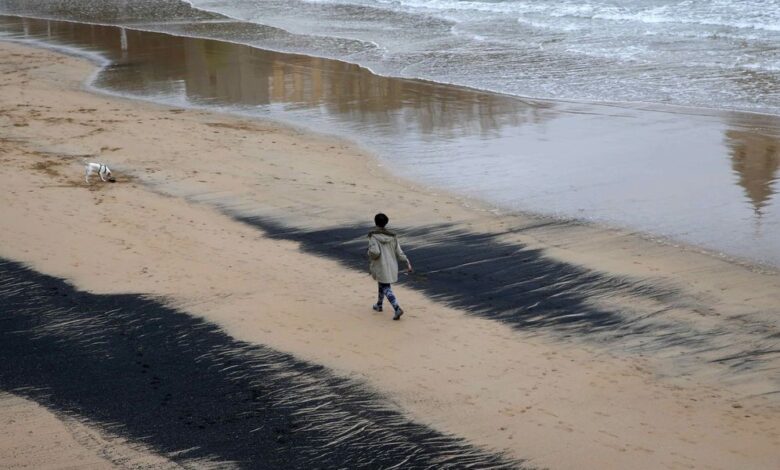
Since 2018, San Lorenzo beach in Gijón has regularly greeted residents and tourists with black stains on the sand. They are especially noticeable after storms and strong waves. Locals have long grown tired of the sight: for some, it’s just an unpleasant scene, for others—a worrying sign about the state of the environment.
The question of the origin of these stains remains open. Some experts insist it’s due to the old shipwreck of ‘Castillo de Salas’, which sank in 1986 with a cargo of coal. Others argue that the issue is linked to modern coal handling operations at the El Musel port. Both versions are supported by separate studies, but there is no consensus.
In recent months, port authorities have announced a new study together with the Instituto de Hidráulica de Cantabria. Experts intend to examine how wind, tides, and waves contribute to the appearance of the stains. Additionally, there are plans to analyze the movement of coal particles and their accumulation on the shore. The University of Oviedo has also joined the project to assess the situation in the port basins and propose measures to prevent pollution.
Residents of Gijón are openly frustrated: they are demanding concrete action from the authorities, not endless discussions. Proposed measures include installing protective barriers and special shelters to prevent coal from reaching the sea. People are concerned not only about the beach’s appearance, but also about their health: on windy days, coal dust is carried through the area, settling on homes and playgrounds.
For now, the situation remains tense. Each new storm leaves fresh traces on the sand, and ongoing arguments between scientists and officials only add to public resentment. People in Gijón hope that the next study will finally provide clear answers and help get rid of the black stains that have become a symbol of this prolonged environmental problem.