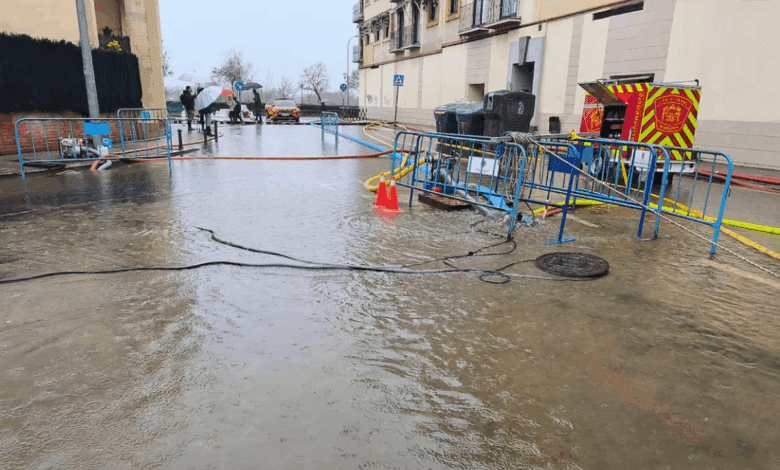
The natural disaster in Talavera de la Reina has become a real challenge for local residents and the city’s infrastructure. After heavy rains and the impact of storm Leonardo, the underground stream La Portiña overflowed, causing massive flooding in the Entretorres district. Hundreds of families found themselves facing a situation where water not only inundated the streets but also seeped into basements, garages, and even through the walls of homes. For many, this unexpected blow has raised serious doubts about the city’s preparedness for such catastrophes.
The aftermath of the flood is felt daily: residents are forced to pump water out around the clock to save their property. Despite the efforts of public utilities, the water level in homes and on the streets does not drop for long. The situation is aggravated by a shortage of equipment—there are simply not enough pumps to handle the volume of water rising from underground. City authorities report that 28 pumping stations are operating, channeling millions of liters of water each hour into the river Tajo, but even the river is on the verge of overflowing.
Politics and emotions
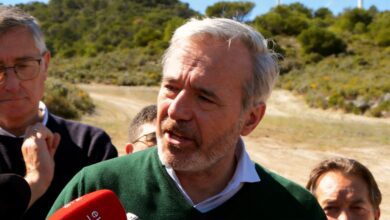
At the height of the crisis, Mayor José Julián Gregorio visited the Entretorres district together with Francisco Núñez, head of the regional branch of the Partido Popular. Their visit sparked a strong reaction among residents: many accused the politicians of trying to use the disaster for political infighting. Núñez sharply criticized the regional government, accusing it of inaction and neglecting the interests of Talavera’s residents. In response, government officials assured that they were acting solely in the interests of those affected, making no distinctions based on political views.
Political intervention brought no relief: people continue to confront the aftermath of the disaster, and discontent is growing. Some residents believe that the cause of the disaster lies not only in the weather, but also in the poor condition of the city sewers, which failed to cope with the flow of water. Authorities, for their part, emphasize that the situation is an emergency and requires coordination of all services.
Emergency measures
The municipality has appealed for assistance from national bodies, seeking recognition of the district as a disaster area. This would allow additional resources to be mobilized and speed up recovery efforts. The regional government sent extra pumps and fire trucks to Talavera to step up water removal. However, even with these measures, the water level in some homes continues to rise several hours after each new round of pumping.
At the same time, residents face daily challenges: property has been damaged, power supply has been disrupted, and in some areas it is impossible to move through the streets. Authorities have pledged to continue working until the threat is completely eliminated, but many fear that the situation may repeat itself with the next heavy rain.
Comparison with other regions
The Leonardo storm has affected not only Talavera. In other parts of the country, the aftermath of the storm proved equally devastating: mass evacuations, closed roads, and the cancellation of classes in schools have become a reality for thousands of Spaniards. For example, in Andalusia, the situation developed so rapidly that many roads ended up blocked, and residents were forced to leave their homes. This highlights the scale of the problem and the urgent need to rethink risk management in the face of a changing climate.
In Talavera, despite all efforts, residents continue to live in anticipation of further downpours. Each day brings new challenges: water returns as soon as the pumps stop, and the city’s infrastructure cannot handle the strain. Authorities have promised to review the drainage system and strengthen protection against similar disasters, but for many families, coping with the current hardship remains the top priority.
In recent years, Spain has been facing a growing number of extreme weather events. Floods caused by heavy rains and storms are becoming increasingly common in different regions of the country. In 2023, similar problems were observed in Murcia and Valencia, where overflowing rivers and canals flooded entire neighborhoods. At that time, authorities also declared a state of emergency and mobilized additional resources to deal with the aftermath. Experts note that climate change and the aging urban infrastructure are increasing the vulnerability of Spanish cities to natural disasters. The modernization of drainage systems and coordination of emergency services have become key issues for preventing new catastrophes.