Ahead of Easter, Spanish roads are experiencing unprecedented levels of control. The Guardia’s decision to increase the number of mobile speed cameras and random checks for alcohol and drugs is driven by alarming statistics: during the same period last year, 27 people lost their lives. According to El Pais, authorities hope to reduce the number of tragedies, as up to 17 million journeys are expected across the country this year.
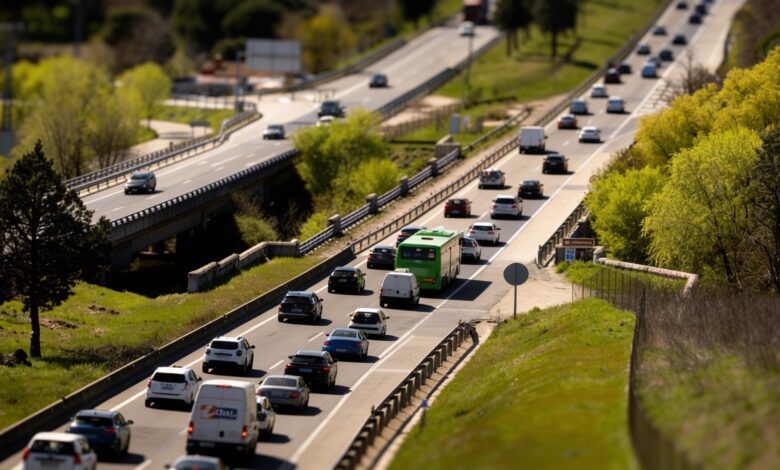
Special attention is being given to peak travel days, when traffic on key highways becomes especially dense. Starting April 1, as the second phase of the operation launches, additional patrols and hidden speed cameras will be deployed on the roads. These will operate while moving, identifying speeding violations on high-capacity sections—mainly on the A-66, A-3, and A-6 motorways. If stopping the driver is not possible, the fine notification will be sent by mail, including a photo and the recorded speed.
Fixed speed cameras remain in operation as well: more than 900 devices are continuously monitoring violations, and since late February, 33 new units have been added across 11 regions. This means that even familiar routes are now under closer scrutiny, and drivers should not relax on any section.
Checks and risks
Alongside speed checks, the Guardia is intensifying alcohol and drug testing. These inspections are carried out randomly, including at night and on weekdays between weekends. According to RUSSPAIN.COM, special attention is paid to short trips, when drivers mistakenly believe that a small amount of alcohol or other substances won’t affect their reaction. Such situations often lead to accidents, especially on familiar routes, where overconfidence can result in tragedy.
Recent years’ statistics confirm: most fatalities occur on ordinary roads with one lane in each direction. Head-on collisions and vehicles running off the road are most common here, especially on dangerous curves. According to El Pais, such sections account for 72% of all accidents, with the main cause of death being vehicles leaving the roadway or frontal collisions.
In 2025, 821 people died on regular roads and another 298 on highways. Run-off-road accidents (43% of deaths) and head-on collisions (21%) dominate the statistics. This highlights the importance of new measures, as even minor speeding or slight intoxication can have irreversible consequences.
Focus on motorcyclists
This year, the Guardia is placing special emphasis on motorcyclists. The forecast of good weather and the long weekend traditionally attract thousands of two-wheel enthusiasts to the roads. Mountain routes and winding sections are considered especially dangerous, as they often see large groups of motorcyclists gathering. Police use unmarked motorcycles with officers in plain clothes to monitor these areas and relay information about violations to uniformed patrols.
Of the 27 people who died during last year’s Easter, eight were motorcyclists. This has prompted authorities to look for new ways to improve safety for this specific group of road users. As many now opt for short group trips, the risk of collisions and accidents rises, especially on popular, busy routes.
This year’s holidays coincided with the absence of long weekends in the first quarter and poor weather at the start of the year. As a result, there’s been a sharp increase in people wanting to travel, putting additional strain on the roads. Moreover, disruptions to rail services, including the recent incident in Adamuz (Córdoba) and the cancellation of high-speed trains to Málaga, have forced many to switch to private cars and buses.
Context and consequences
The introduction of new road safety measures in Spain coincided with a rise in accidents during holiday periods. Similar steps have already been taken in other regions of the country: for example, in Murcia, authorities recently expanded free public transport and parking to ease congestion in the city center and reduce traffic jams during Easter. More about these initiatives can be found in the article on measures to reduce road congestion in Murcia.
In recent years, Spain has faced the need to revise its approach to road safety. Spikes in accident rates during periods of mass travel, such as Easter or the summer holidays, have led to stricter controls and the introduction of new technologies to detect violations. In 2024, for example, hurricane-force winds and snowfall in Catalonia resulted in traffic restrictions, with authorities warning drivers about the risks. Such measures are becoming standard to prevent tragedies and save lives on the country’s roads.