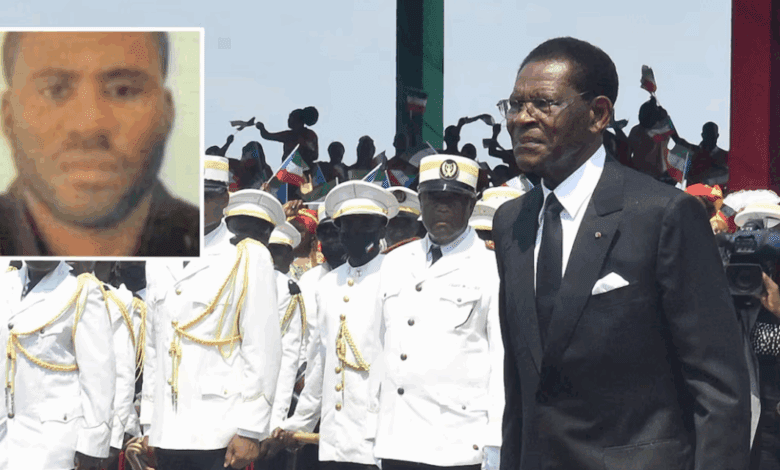
Spanish society has once again witnessed a high-profile confrontation between the national judiciary and senior officials from Equatorial Guinea. This time, key figures in a case involving the abduction and torture of opposition members living in Spain have once again failed to appear in court. This incident not only undermines trust in international justice mechanisms but also casts doubt on the possibility of holding foreign officials accused of serious crimes accountable.
At the center of the scandal is Carmelo Ovono Obiang, the son of the president of Equatorial Guinea, along with two other high-ranking officials wanted internationally. Their refusal to cooperate with the Spanish investigation concerning charges of terrorism, abduction, and torture has sparked widespread outrage and presented yet another challenge for the Spanish judicial system.
Questioning disrupted
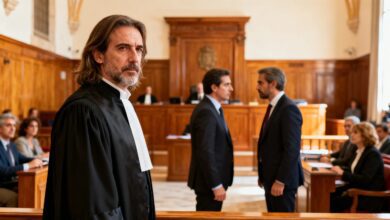
The attempt to conduct the questioning via video link failed: the accused once again did not appear, despite a renewed invitation from National Court judge Santiago Pedraz. This is the second time the defendants have ignored the demands of Spanish justice. Notably, this time the court chamber itself intervened, canceling the possibility of questioning by videoconference, stressing that such a procedure does not ensure genuine submission to Spanish jurisdiction.
The court decision upheld the international arrest warrants and the order for pretrial detention. Now, any further action is only possible after the actual detention of the suspects and their personal appearance for questioning in Spain. This ruling was an unexpected turn that effectively stalled the process and cast doubt on its further progress.
Political pressure
The situation became more complicated after a public statement from Equatorial Guinea’s Vice President Teodorin Nguema Obiang, who categorically rejected the possibility of any government officials from his country participating in the Spanish judicial process. In his social media post, he emphasized that all Guinea authorities possess immunity and cannot be prosecuted abroad.
This statement had immediate consequences: the defendants’ lawyer officially notified the court that his clients would not testify and requested the cancellation of the scheduled questioning. He cited as the reason the recent speeches of the victims’ lawyer in the Spanish parliament, where human rights violations in Equatorial Guinea were discussed.
Legal maneuvers
The defense’s attempt to arrange a video interrogation, despite Guinea’s firm stance, surprised both the opposition and observers. The country’s government had previously stated on several occasions that it does not recognize the competence of Spanish courts and had prohibited its officials from participating in such proceedings. In March 2023, Guinea’s Foreign Ministry sent an official note to Spain explicitly refusing to recognize the jurisdiction of Spanish courts in this case.
Legal experts believe that the defense attorney’s initiative may have been an attempt to expedite the closure of the case, as the formal interrogation is a necessary condition for ending the investigation. However, over four years of investigation, the judge and prosecutors have repeatedly faced attempts to delay or terminate proceedings, which has only heightened suspicions of efforts to avoid responsibility.
The abduction case
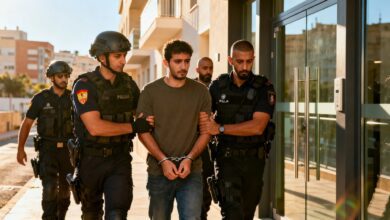
The main suspects in the case — Carmelo Ovono Obiang, Nicolás Obama Nchama, and Isaac Ngema Ondo — have been on the international wanted list since they first refused to appear for interrogation almost three years ago. They are accused of the abduction and torture of four opposition members living in Spain, which took place in 2019 in Juba, the capital of South Sudan. The victims were lured onto the presidential plane under false pretenses and taken to Bata, where they were tried and convicted for attempting a coup.
One of the abducted, Julio Obama, died in prison as a result of torture. The European Parliament unanimously demanded the return of his body and condemned the actions of Teodoro Obiang’s government. The whereabouts of the deceased’s body remain unknown, while the other victims continue to seek justice.
Unexpected twists
Julio Obama’s death occurred shortly after Judge Pedras refused to detain Carmelo Ovono Obiang, who was in Madrid at the time. Instead of being arrested, he was simply handed the indictment, although previously the judge had requested his arrest and the seizure of his mobile phone. The reasons for the judge’s change of position have yet to be officially explained.
A witness who was in the same prison confirmed that after the president’s son returned to Equatorial Guinea, all four opposition members were subjected to renewed torture. Carmelo Ovono left Spain that same night and has not returned since, despite having a residence permit, being married to a Spanish citizen, and having substantial assets in the country.
In recent years, Spain has faced a series of high-profile cases involving foreign officials refusing to cooperate with national justice. Such incidents spark intense debate about the boundaries of jurisdiction, international warrants, and the effectiveness of extradition. One recalls how last year a judge refused to reopen a case against a prominent politician, igniting a wave of discussion about the transparency and independence of the judicial system. Read more about how unexpected judicial decisions can influence the course of high-profile cases in the article “Judge Refused to Reopen Case Against Cospedal: An Unexpected Turn in the Villarejo Affair.”