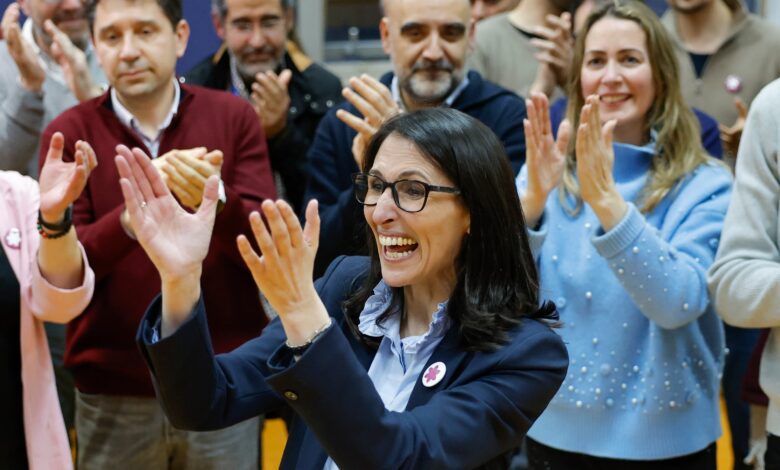
For the first time in the history of Galicia’s universities, leadership of the region’s largest university has passed to a woman. The event has sparked broad discussion among students and faculty, as the changes concern not only internal policies but also the university’s social role in the region. As El Pais notes, the election results surprised many, while the high student turnout showed that education and youth issues remain a focal point for society.
A new chapter for the university
Rosa Crujeiras, a mathematics and statistics specialist, has become the first female rector of the Universidade de Santiago. Her victory in the second round, securing 61% of the vote, was decisive, putting her 20 points ahead of her rival Maite Flores. Both candidates advanced to the second round after record turnout in the first stage, which took place on February 12. This time, student participation again exceeded usual levels, indicating growing interest in university governance.
Rosa Crujeiras was born in 1978 in the village of Artes, located in the municipality of Ribeira (A Coruña). She holds a professorship in statistics and research methods in the mathematics faculty and until recently led the Galicia Center for Mathematical Research and Technology (CITMAga). During her campaign, Crujeiras often emphasized her background in a fishing family and the importance of the university as a tool for social change.
Challenges and issues
The new leadership faces significant challenges. An upcoming wave of retirements among university staff could lead to a shortage of personnel in the coming years. Crujeiras proposed a phased approach to address this issue, planning to introduce mentorship programs and tailor solutions for each department. Another urgent matter is student housing: finding affordable accommodation in Santiago is increasingly difficult, and this topic was a key point during the election debates.
The rector promises to work with the municipalities of Santiago and Lugo to expand the affordable rental market and launch projects where students and seniors share housing. According to Crujeiras, the housing situation has already become a social issue that requires urgent solutions.
Election campaign and competition
Maite Flores, a professor of physics and optics, received 41% of the vote, emerging as a surprise contender in the race. Despite less public recognition, she advanced to the second round, which caught many observers off guard. During the campaign, Flores faced criticism and allegations targeting her team, and complained about false rumors and offensive graffiti in university lecture halls. Crujeiras, for her part, condemned the aggressive rhetoric and called for mutual respect among the candidates.
More than 28,000 members of the university community took part in the elections, including over 24,000 students. In the first round, held in February, two other candidates—María José López Couso and Alba Nogueira—were eliminated. The high student turnout is attributed to the option of online voting, which has become the new standard for such events.
Context and implications
After the voting ended, a period for submitting appeals opened and will last until March 20. Final results and the official appointment of the new rector will be announced on March 23. According to El Pais, these elections could prove to be a turning point for the entire higher education system in Galicia, setting new standards for transparency and student engagement.
In recent years, women have increasingly taken leadership positions at Spanish universities, reflecting a broader trend of gender equality in education. For example, in 2024 similar changes took place at universities in Madrid and Barcelona, where women were elected rectors for the first time. The growing number of women in key roles is driving updates to academic programs and the introduction of new approaches to university management. These changes are accompanied by active discussions about accessibility and social mobility in education, an issue that is becoming increasingly important across the country.