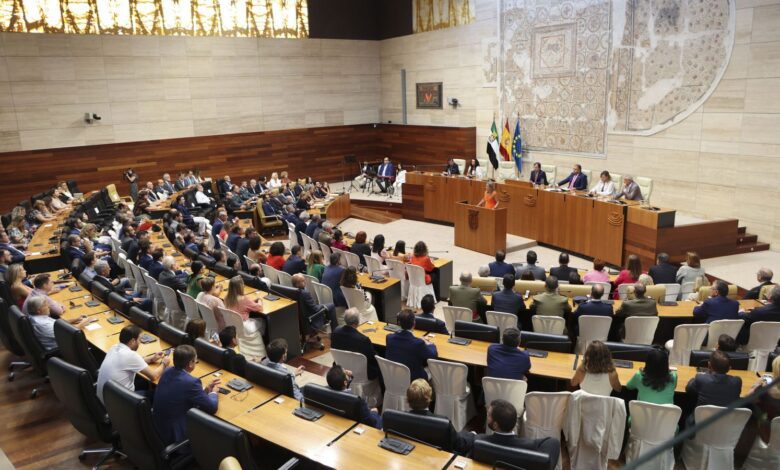
In Extremadura, the political climate is once again on the verge of change. After the early dissolution of parliament, initiated by the region’s current leader María Guardiola, residents are preparing for new elections. The cause was the failure to approve the budget, making it necessary to renew the legislative body. The region has 65 parliamentary seats, and the battle for them is expected to be intense.
Results from the previous elections showed that no party gained a clear advantage. The Socialists (PSOE) and the Partido Popular each won 28 seats, making them the main rivals in parliament. VOX secured 5 seats, while the Unidas Podemos coalition received 4. This balance of power prevented any leader from forming a government independently.
Mechanics of seat allocation
To govern the region without depending on others, a party needs the support of at least 33 deputies—the number required for an absolute majority in the Extremadura Assembly. Parliament is formed across two electoral districts: Badajoz and Cáceres. The first elects 36 deputies, the second 29. This distribution reflects the population of each province and influences the final balance of power.
Every vote here is crucial. Even a single extra seat can shift the balance and allow one party to tip the scales in its favor. In a scenario where no force dominates, negotiations and coalitions become key tools for forming a government.
Electoral threshold
Not all political groups can count on parliamentary representation. To win even a single seat, a party must surpass the five percent threshold of the total number of valid votes. This calculation includes ballots cast for party lists as well as “none of the above” votes (in Spain — votos en blanco). Only after this are seats distributed according to the D’Hondt method, which ensures proportional representation based on results in each district.
In 2023, the Socialists received 242,366 votes, while the Popular Party got 236,090. Despite a difference of several thousand votes, both camps secured the same number of seats. This further highlights how crucial every vote is and how difficult it is to gain an advantage in a highly competitive environment.
Coalitions and agreements
When no party can govern alone, negotiations come to the forefront. That’s exactly what happened after the last election: María Guardiola became regional president only thanks to VOX’s support. Without this alliance, neither side would have been able to form a stable majority.
In such circumstances, even small parties end up in the spotlight. Their votes become decisive for coalition-building and the allocation of key positions. This adds intrigue and makes the formation of government unpredictable.
The role of provinces
Badajoz and Cáceres are more than just geographical names—they are true political battlegrounds. Badajoz has 36 seats at stake, Cáceres 29. The final allocation depends on voter turnout and the nuances of local political rivalry. Sometimes, provincial results can be decisive for the entire region.
In recent years, there has been a clear divide between the city and the countryside. This is reflected in parliament: different territories are represented in different ways, affecting decision-making and coalition-building.
The prospects for new elections
The early elections scheduled for December 21 could reshape the political landscape of Extremadura. However, if no party succeeds in securing an absolute majority again, the region will once more face the need for compromise. With every seat mattering, even minor shifts at the polls could lead to new alliances and unexpected outcomes.
Meanwhile, the main contenders—PSOE, Partido Popular, VOX, and Unidas Podemos—are preparing for another round in the battle for power. The question of who can secure the necessary 33 votes remains open, and is a matter of concern not only for politicians, but for all the region’s residents.