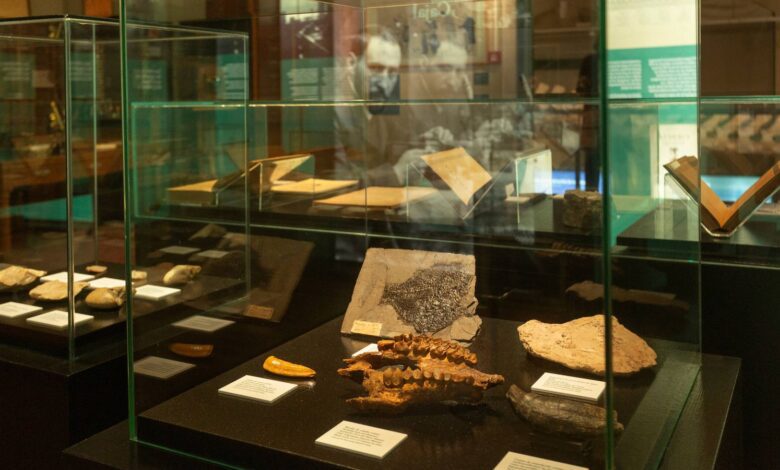
An exhibition dedicated to Ignacio Bolívar y Urrutia has opened in Madrid — a man who, over several decades, transformed the Museo Nacional de Ciencias Naturales (MNCN) into one of Europe’s most renowned scientific centers. For a long time, his name remained in the background, yet it was thanks to him that the museum acquired unique collections, became a hub for scientists and students, and gained international prestige.
Bolívar took the helm of the museum at the beginning of the 20th century and led it until 1936. During this time, he not only expanded the collections but also launched major scientific expeditions, established the publication of scientific journals, and secured a new spacious building for the museum in Madrid. Under his leadership, the museum acquired the famous diplodocus skeleton as well as rare animal specimens found nowhere else in the world.
A reformer’s path: new collections and scientific partnerships
With Bolívar’s arrival, the museum began collaborating actively with the country’s leading scientific institutions. He established ties with the Junta de Ampliación de Estudios (JAE), enabling young scientists to receive scholarships for internships abroad. This gave a powerful boost to Spanish science and brought new specialists to the museum.
During this period, the museum acquired unique exhibits: an African elephant gifted by the duque de Alba, a taxidermy mount of the extinct Tanzanian wolf, and an okapi—an animal virtually unknown at the time. Bolívar personally negotiated with international colleagues to enrich the museum’s collection with rare species. Thanks to his efforts, the museum gained dioramas crafted by the Benedito brothers (José María and Luis Benedito), combining the art of taxidermy with scientific accuracy.
The Museum in Its New Home: The Fight for Space and Recognition
Before Bolívar, the museum changed locations several times, struggling with a lack of space. In 1910, he managed to secure a move to a building on the site of the former racetrack, where the museum remains today. There, he also brought his personal insect collection, which had previously been stored elsewhere. By 1935, the museum occupied both wings of the building, becoming the country’s largest scientific center.
Bolívar was not only an administrator, but also a distinguished scientist. He taught at the Central University of Madrid (now Complutense), was a member of several academies, led the JAE after the death of Ramón y Cajal, and headed the Royal Botanical Garden. At just 20, he became one of the founders of the Spanish Society of Natural History. His scientific interests focused on the study of Orthoptera—grasshoppers, locusts, and crickets—where he was a recognized world authority.
Legacy and Exile: The Scholar’s Fate in Times of Change
The museum exhibition showcases Bolívar’s contribution to the development of its collections, his scientific expeditions to Africa, and his work creating new exhibits. The display features photographs of the museum halls, taxidermy workshops, and portraits of staff members who worked under his leadership. A special section is dedicated to his son, Cándido Bolívar Pieltain, who also became a renowned entomologist and accompanied his father into exile.
In 1935, Madrid hosted an international congress of entomologists that brought together 400 specialists from around the world. Bolívar served as its chairman—one of the last major milestones of his career in Spain. Just a year later, he and his colleagues found themselves in Valencia, where the republican government was based. After the civil war ended, at nearly 90 years old, Bolívar was forced to leave Spain and move to Mexico.
Final years and impact on science
During his exile, Bolívar continued his scientific work. He founded the journal “Ciencia,” which became a platform for Spanish and Latin American scholars in exile. The journal was published until 1975, bringing together researchers from both sides of the Atlantic. Despite his age, Bolívar kept working and publishing scientific articles, signing them as the director of the Museum of Natural Sciences.
Bolívar’s connection with the republican movement was not direct, but his work at the JAE and collaboration with progressive intellectuals made him unwelcome under the Franco regime. His son Cándido was not only a scholar but also the secretary to the President of the Republic, Manuel Azaña. After they left, both the museum and Spanish science entered a period of decline: many institutes were closed, scientific publications ceased to circulate, and the museum lost its former status.
Ignacio Bolívar lived to the age of 94 and remained devoted to science until his final days. When asked why he was leaving Spain at such an advanced age, he replied: “So I can die with dignity.” Today, his contribution to the development of the museum and science in Spain is once again receiving attention and recognition.