In the early 17th century, Madrid was not yet the metropolis we know today. However, in the play “El acero de Madrid,” Lope de Vega gives the city the qualities of an independent character rather than just a backdrop for events. Here, the streets become a labyrinth where any passerby can hide their true face, and the crowds provide perfect cover for deception and transformation.
Romantic intrigues, seemingly frivolous at first glance, are closely intertwined with the city’s topography. Strolls down Calle Mayor, secret conversations near the Manzanares, rituals with ferruginous water from Chamartín—all these are more than just everyday details; they are elements of an intricate game in which each participant tries on a new mask. The water that gave the play its name served not only as a remedy but also as a pretext for meetings, exchanged glances, and verbal duels. In these places, passions were born and extinguished, and the city became an arena for endless transformations.
Lope saw Madrid as a boiling pot of anonymity. Here, one could forget the past, invent a new biography, hide behind a fictitious name, or pose as a descendant of a noble family. What we now call a fake profile on social media could already be glimpsed in the behavior of characters who concealed themselves in the noise and hustle of city life. In the play, Madrid is a place where truth dissolves into exaggeration, and desires flare up and fade away as quickly as a passing glance in the street or an instant ‘match’ in an app.
The title of the comedy is not just a reference to medicinal water. It serves as a symbol that broadens the meaning: iron becomes not only a means of strengthening one’s health but also a social ritual, a reason to gather and exchange roles. Residents from across the city would flock to Chamartín to blend in with the crowd, try on a new persona, and start intrigues. Lope skillfully orchestrated these entanglements, turning the city into a stage for endless comedic scenarios.
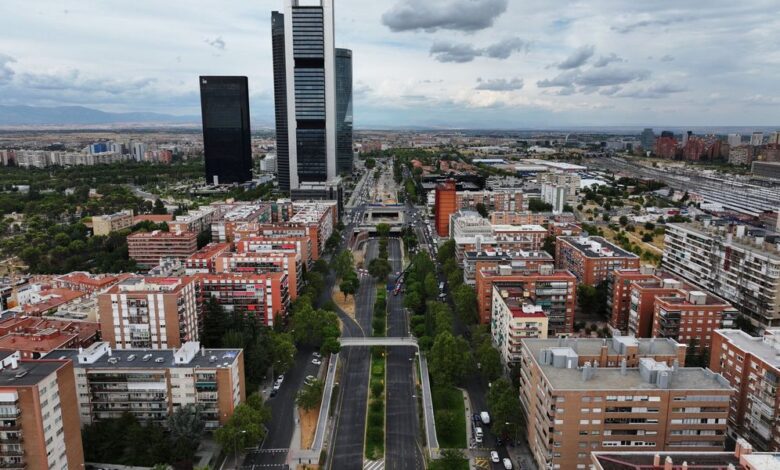
Four centuries have passed, and Madrid’s iron is no longer consumed—it is observed. Glass towers now rise where the old springs once stood, symbols of a new era. Chamartín is no longer a place for healing but a business hub, where the city’s energy is devoted to sustaining the illusion of eternal youth and success. Madrid still promises renewal, but now that renewal is merely an illusion, concealing exhaustion and disappointment.
In Lope’s time, the city was a laboratory for experiments in identity. The crowd allowed one to dissolve, become someone else, and conceal true intentions. Today, this function of the city unfolds in digital spaces: fake profiles, avatars, and alter egos on dating apps. Then as now, Madrid serves as a mediator between reality and fiction, a place where anyone can play their part.
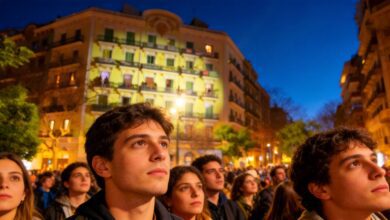
In the 17th century, the main meeting spot was the Prado de San Jerónimo—people strolled, flirted, and made plans there. Today, crowds gather on Gran Vía, in the metro, in traffic jams on the M-30. The essence remains the same: the city is a stage where everyone tries to stand out among the many faces. Lope turned this crowd into a driving force for his plots, and we have made it part of everyday life. But the desire to be unique in a vast city has not disappeared.
Lope’s Madrid was a comedy—ours is a show. Then, characters pretended to be someone else; now, we perform authenticity in a digital world. The scenery changes, but the masks remain. The city never fully reveals itself—it is always in makeup, always searching for a new role. Lope sensed this first: Madrid is not just a place on the map, but a living, complex character full of voices and faces. And this trait has never faded—not in the 17th century, nor in the 21st. Madrid heals with iron, but always remains a little sick with itself.