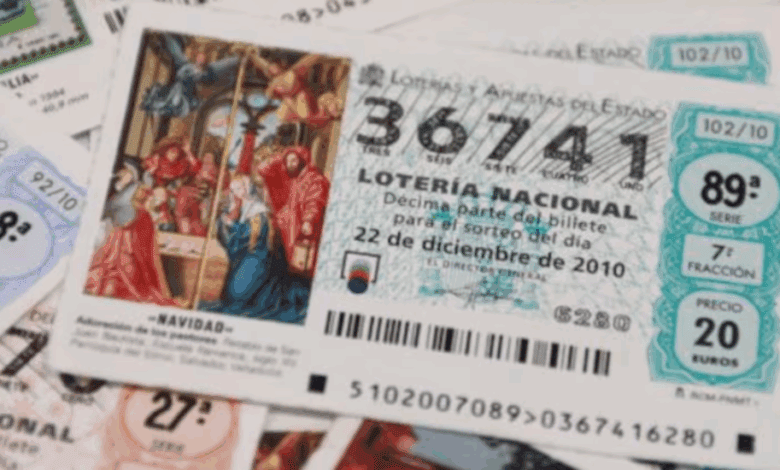
In Spain, a new debate has erupted over an unusual math problem related to the traditional Christmas lottery. This year, a mathematics professor from Madrid challenged participants to calculate the probability that two randomly selected tickets from a box with an unknown number of tickets both have even numbers. The conditions were simple: the box contains between 30 and 40 tickets, but the exact number is unknown. The only information given is that the probability of drawing two even-numbered tickets is exactly one third. The question was: what is the probability that both selected tickets have odd numbers?
Solving this problem turned out to be more difficult than it first appeared. To begin with, one needed to determine how many tickets were in the box, as well as how many of them had even numbers. The mathematician denoted the total number of tickets as T, and the number of even-numbered tickets as N. The number of ways to select two tickets out of T is T times (T-1). Similarly, the number of ways to choose two even-numbered tickets is N times (N-1). The probability of getting two even-numbered tickets is calculated as the ratio: N x (N-1) / (T x (T-1)).
Next, it was necessary to find such values for T and N so that this ratio would equal one third, and T would fall within the specified range. The mathematician noticed that the product T x (T-1) must be divisible by three for the result to be an integer. This allowed him to eliminate some values of T that did not meet this criterion. After trying out the possible options, it turned out that the only suitable value was 36. That is, there are exactly 36 tickets in the box, 21 of which have even numbers and the remaining 15 have odd numbers.
Probability check
Once the exact number of tickets was determined, the next step was to calculate the probability that both tickets drawn would have odd numbers. For this, it was necessary to find the number of ways to select two odd tickets: 15 x 14. The total number of ways to choose any two tickets is 36 x 35. Dividing one by the other gives: (15 x 14) / (36 x 35) = 1/6. Thus, the probability of drawing two tickets with odd numbers is one sixth.
Interestingly, if you add the probability of drawing two even tickets (1/3) and the probability of drawing two odd tickets (1/6), you get exactly one half. This means the remaining probability (also 1/2) covers the cases where one ticket is even and the other is odd. Such symmetry in the probability distribution adds a special mathematical charm to the problem.
Other options
The mathematician also considered what would happen if the number of tickets was not limited to the range from 30 to 40. In that case, there would be other solutions as well. For example, if there are only 3 tickets in the box, 2 of which are even, the probability of drawing two even tickets is still one third, but the probability of drawing two odd tickets is zero. If there are 10 tickets, with 6 of them even, the probability of drawing two even tickets is one third, while the probability for two odd tickets is two fifteenths. With 133 tickets and 77 of them even, the probability of drawing two even tickets is one third, and for two odd tickets, it is ten fifty-sevenths.
It turns out there are infinitely many pairs of positive integers that satisfy these conditions. They are connected to the so-called Pell equation, well known in number theory. However, the problem specifically indicated the range from 30 to 40 to narrow the search to a unique solution.
Participation and Awards
This year, the problem sparked great interest among math enthusiasts and students. Many tried to find the answer through simple brute-force methods as well as more advanced mathematical techniques. Ultimately, a number of participants managed to find the correct solution, including some very young readers.
As a token of appreciation, the organizers decided to reward the three youngest participants who were first to send in the correct solutions. They will receive books from the Spanish Mathematical Society. The author of the problem congratulated everyone on the upcoming Christmas holiday and wished them luck in the new year.