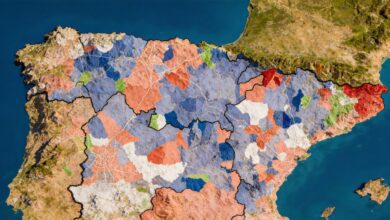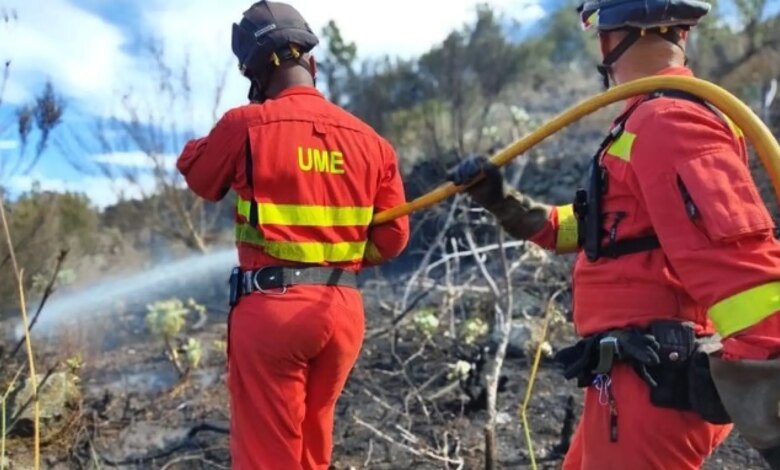
Every summer in Spain, thousands of hectares of forest are engulfed by fire. In July 2025 alone, 26,900 hectares of burned land were recorded, which is 10% below the recent years’ average. In August, this figure had already exceeded 16,000 hectares, and the situation remains tense due to numerous active fires. In the fight against such large-scale wildfires, as well as other emergencies, the Unidad Militar de Emergencias (UME) plays a decisive role.
The history of UME dates back to 2005, when the Spanish government decided to form a specialized military unit to respond to major disasters and threats. By 2006, UME became the first operational force deployed during serious emergencies. In 2011, a special protocol was adopted detailing the conditions and procedures for its deployment.
According to this document, UME can be called in to deal with the aftermath of natural disasters—floods, earthquakes, landslides, heavy snowfalls, and other extreme weather events. The unit is also involved in fighting forest fires, responding to man-made accidents, including chemical, biological, radiological, and nuclear threats, as well as terrorist attacks and environmental pollution. If necessary, UME can also be deployed abroad as part of European and international civil protection missions.
In 2015, UME’s role was officially established in national legislation: the unit gained the status of a public structure responsible for emergency response. In the event of national-scale emergencies, UME answers directly to the Ministry of Defense, enabling swift decision-making and rapid response to threats.
In 2017, a Military School for Emergency Situations was created to train personnel, and in 2018 UME’s structure was further streamlined to increase efficiency. By 2020, the unit had finalized its organizational model and expanded its technical capabilities.
Currently, UME operates only by government order, when the scale of disaster exceeds the capacity of civilian services or requires specialized support. The unit’s main missions are to protect the population, restore order, and ensure the safety of critical infrastructure.
Organizationally, UME is headed by a general who reports to the Minister of Defense. Operational coordination during national emergencies is conducted under the supervision of the Ministry of the Interior. The structure includes five battalions located in various regions of the country: Madrid (Torrejon de Ardoz), Sevilla (Moron), Valencia (Betera), Zaragoza, and Leon (San Andres del Rabanedo). In addition, UME includes a communications battalion, a support regiment, and two units in the Canary Islands.
Each battalion consists of a command unit, a support company, two companies for responding to natural disasters, and an engineering company. UME also has operational control over aviation units—namely, the 43rd Air Force Group and a helicopter battalion—enabling rapid response to any emergency.
Currently, UME has 3,278 military personnel, including officers, sergeants, and enlisted ranks. Women make up about 7.5% of the staff, totaling 244 people. All members receive specialized training to operate in conditions of fires, floods, snowstorms, collapses, and other emergencies, as well as first aid and emergency medical response skills.
UME service members receive slightly higher salaries than their counterparts in other army units. This is due to additional compensation for complexity, responsibility, and constant readiness for deployment. On average, privates or sailors earn between 1,600 and 1,700 euros per month, including bonuses. Corporals earn around 1,800 euros, sergeants about 2,100 euros, senior officers up to 2,850 euros, lieutenants around 2,750 euros, and colonels more than 3,700 euros. Additional payments depend on position, job specifics, and the need to be constantly present near the base.
Admission to UME requires at least 6-7 years of service experience in other military units, as well as compliance with physical and psychological requirements. Candidates undergo endurance and swimming tests, as well as a medical examination. Additionally, reservists may join UME after completing a special training course, which includes theoretical and practical sessions, as well as instruction in providing medical assistance in disaster conditions.
The Military Emergency Unit remains one of Spain’s most mobile and technologically equipped organizations, capable of responding rapidly to any threat—from natural disasters to industrial accidents and terrorist attacks.