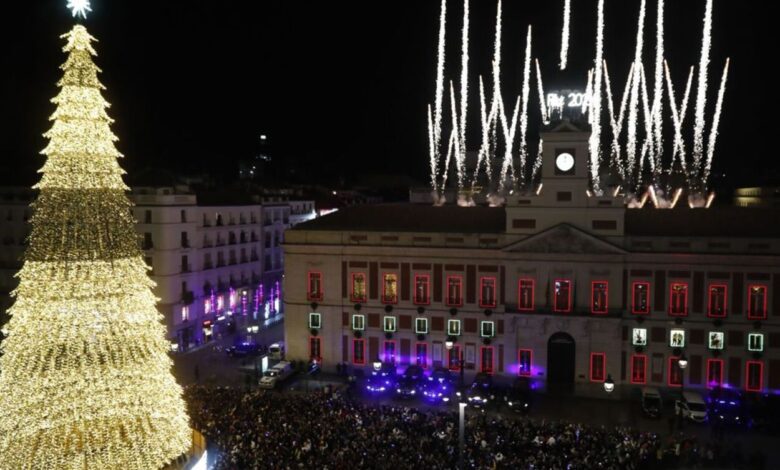
On the night of December 31 to January 1, central Madrid will once again attract thousands who want to ring in the New Year to the chimes of the famous clock at Puerta del Sol. The square is always filled with a special atmosphere: crowds, the anticipation of midnight, the tradition of twelve grapes, and flashes from cameras. This year, organizers have stepped up security and introduced new rules for everyone planning to celebrate in the very heart of the capital on New Year’s Eve.
Preparations for the festivities will begin in the afternoon. From early evening, all traffic through Puerta del Sol will be completely halted, and access to the area will be strictly controlled. Pedestrian entry will be allowed only through four streets: Mayor, Arenal, Alcalá, and Carrera de San Jerónimo. Emergency exits will be available via Preciados and Carmen. The Sol metro station will close to passengers at 9:00 p.m. to prevent overcrowding and maintain order.
Safety and crowd control
This year, the square will hold no more than 15,000 people—a limit set last year and still in place. All entrances to the square will have double security lines: first, bags and personal items will be checked, then documents. Glass bottles, fireworks, and any dangerous items are strictly prohibited. Security will include not only uniformed police officers but also plainclothes personnel, as well as canine units, mounted patrols, and even drones monitoring from above. Medical teams will be reinforced: ambulances, mobile posts, and bicycle patrols will be on duty throughout the square.
Authorities warn that if crowd density becomes too high, police may temporarily close certain entrances or redirect people along less congested routes. Special attention will be given to monitoring minors and enforcing rules in nearby bars and nightclubs. Violators will be removed from the area without prior warning.
Transport and traffic
On New Year’s Eve, traffic in the city center will be restricted. Many streets leading to Puerta del Sol will become one-way for pedestrians to help prevent congestion and stampedes. Madrid Metro will increase the number of trains on major lines, but Sol station will remain closed from 9:00 pm until morning. EMT buses will run more frequently, with night routes starting at 10:30 pm. Cercanías suburban trains will follow their regular schedule, but key stations will have enhanced security measures.
Taxis will operate without restriction that night, including access to streets with limited traffic. This will allow partygoers to get home quickly and safely after the celebrations. Private car drivers are advised to plan their routes in advance and avoid the city center.
Tips for visitors
Organizers strongly recommend arriving at the square early to avoid queues and not miss the start of the celebration. Be sure to bring identification. Keep all personal belongings under control—it is easy to lose a wallet or phone in a crowd. If you are with children, write your phone number on your child’s hand—this will help reunite you quickly if they get lost.
Bars and restaurants nearby will face increased inspections: alcohol will not be sold to minors, and establishments must strictly adhere to visitor limits. If necessary, police may temporarily close entrances or restrict operations.
Tradition and television
The custom of ringing in the New Year to the chimes at Puerta del Sol has existed since 1909. That year, a surplus grape harvest in Levante led to the tradition of eating one grape for each stroke of the clock—for good luck. Since then, millions of Spaniards repeat this ritual, gathering in the square or in front of their televisions.
This year, several TV channels will broadcast the celebration live. On Antena 3 and La Sexta, Cristina Pedroche and Alberto Chicote will return as hosts, joined by Santiago Segura. RTVE’s coverage will be led by Chenoa and the band Estopa, while Mediaset will offer live segments from the Formigal ski resort with Sandra Barneda and Xuso Jones.
Chimes and symbols
The main character of the night is the clock on the tower of Real Casa de Correos. Its precision is overseen by maestro Jesús López Terrados, who has been responsible for the flawless operation of the mechanism for nearly thirty years. Thanks to his expert touch, the ball will drop at midnight, the quarters will chime, and then twelve strikes will mark the start of the New Year for the entire country.