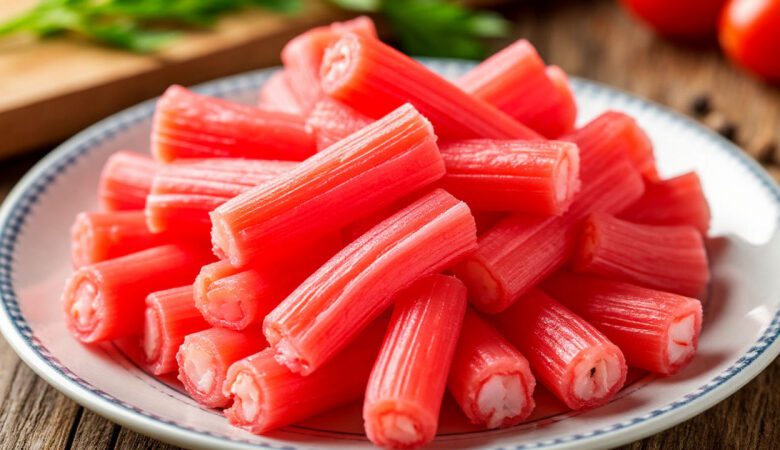
Spanish supermarket shelves are lined with dozens of packs of crab sticks, or “palitos de cangrejo” as they’re called here. Behind the eye-catching packaging are products that differ greatly in quality and ingredients, and choosing the right sticks can make all the difference for your favorite salad—whether it’s a classic ensaladilla or a festive dish for the New Year’s table. Fortunately, it’s not hard to turn this supermarket gamble into a conscious choice. There’s a simple, straightforward method to help you spot quality products and avoid cheap imitations made mostly of starch and soy.
What is surimi?
First, let’s debunk the main myth: crab sticks never have and never did contain real crab meat. The name is rooted in history and marketing—this product only mimics the delicate, fibrous texture of crab meat. The real foundation of good-quality sticks is surimi. It’s important to understand that surimi isn’t just an ingredient—it’s an entire Japanese fish-processing technology. The process uses fillets of white ocean fish—most often pollock, hake (merluza), or whiting—that are repeatedly washed in clean water and pressed. This removes fat, water-soluble proteins, and pigments from the fillet, leaving behind pure muscle protein with excellent gelling properties.
It is this concentrated protein mass that serves as the dense and elastic base from which the sticks are formed. This leads to a simple rule: if the word “surimi” is not listed first in the ingredients, you’re not looking at traditional crab sticks, but rather an imitation product. Most likely, it’s a mixture made with water, starch, and soy protein, only vaguely resembling the original.
How to read the label correctly
The list of ingredients on the package is the key to understanding what you’re buying. Ingredients are always listed in descending order by their amount in the product. That’s why your main task is to carefully examine the very beginning of this list. The optimal composition looks something like this: surimi (with the percentage indicated, ideally no less than 40%), water, starch (potato or wheat), vegetable oil, salt, sugar, and natural flavors. This formula means there’s enough fish protein in the product to create the right, springy texture, while starch is used only as a supporting stabilizer, not as the main filler. These sticks will have a pleasant layered texture and a delicate fish flavor.
It’s a completely different story if the list starts like this: water, starch, soy protein, vegetable oil, with surimi only modestly mentioned near the end. This is a clear sign that the manufacturer has saved on the main ingredient, replacing it with cheaper components. As a result, you risk ending up with a tasteless, ‘rubbery’ or, conversely, crumbly and falling-apart substance with a strong chemical aftertaste. Remember this rule of thumb: the surimi content in a quality product should be no less than 35-40%. A 25% content is already a critically low threshold, beyond which lies the land of starch and disappointment.
Three tests without opening the package
Even without opening the package, you can learn a lot about a product’s quality. Just do three simple tests right in the store. The first and most important is the elasticity test. Gently bend the blister with the sticks. A high-quality, protein-rich product will be elastic—it will bend easily and return to its original shape. But if the sticks crack, break, or feel as hard as plastic when bent, it’s a clear sign of excess starch.
The second step is a visual inspection. Pay attention to the color. It should be natural, pale pink or creamy, possibly with subtle shade transitions on the colored side. An overly bright or “neon” color indicates an excess of artificial coloring. If the packaging is transparent, check the cross-section: good sticks have a clearly visible fibrous, layered structure resembling meat. Gray or dark spots are unacceptable—they can indicate improper production or storage conditions.
Finally, assess the overall shape and condition. The sticks should be even, neat, with no damage or dried-out edges. The colored coating should be applied to only one side. If the product looks untidy or there are a lot of crumbs in the package, it’s best to put it back. These simple observations will help you make the right choice even before you reach the checkout.
Incidentally, Spain is one of the largest consumers of surimi-based products in Europe. “Palitos de cangrejo” are incredibly popular here and are an essential ingredient in many tapas and salads, including the famous “ensaladilla rusa.” In addition to crab sticks, the Spanish market also offers a variety of other surimi products, such as “gulas”—an imitation of baby eels, often served with garlic and spicy peppers. The main raw materials for producing surimi sold in Spain are usually hake (merluza) and Alaska pollock (abadejo de Alaska), caught in the Atlantic and Pacific Oceans. Spanish manufacturers, such as Angulas Aguinaga, are leaders not only in the domestic market but also internationally.