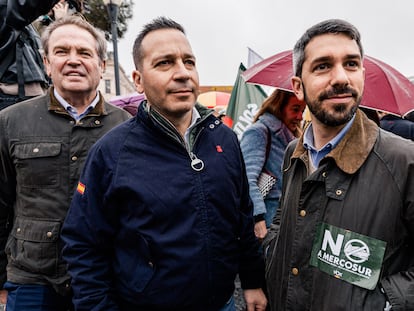
The rapid rise of Vox in small towns and rural areas of Spain has become one of the most striking political trends of recent months. For many residents, these changes bring hope for solutions to long-standing problems that larger parties have ignored for years. Issues such as housing availability, migration, and corruption have taken center stage, fueling strong voter dissatisfaction.
In the municipality of La Muela in the province of Zaragoza, where the population has grown nearly sevenfold over the past two decades, Vox received 31% of the vote. Party leader Santiago Abascal visited the city in person to meet with residents and hold a press conference in the main square. His arrival generated excitement among young people and entrepreneurs, who openly expressed their support. Local businessman Roberto Couto stated publicly that he voted for Vox out of frustration with corruption and a desire to see order in migration policies.
Adrián Tello, mayor of La Muela, notes that memories of past corruption scandals continue to influence the local political climate. Vox’s victory here reflects a national demand for change, rather than just local factors. A similar pattern is observed in other Aragon municipalities, where the party took first place in 39 localities and became the second largest force in another 152 out of 731. In neighboring Extremadura, Vox also strengthened its position, coming second in Badajoz and securing nearly 17% of the vote in the latest elections.
Media strategy and new formats
Political communication experts note that Vox’s success is largely due to its aggressive and well-crafted media strategy. Abascal has become a central figure not only at rallies, but also through his own media projects. In 2022, the party launched the documentary series ‘La España silenciada’, featuring the Vox leader as host. The project garnered millions of views and allowed the party to reach their audience directly, bypassing traditional media outlets.
In La Puebla de Alfindén, where Vox secured 28% of the vote, young residents openly express their disappointment with the old parties. Waitress Noelia Giménez explains her choice by citing the unbearable housing situation and soaring rents. Abascal actively taps into this concern, promising to give Spaniards priority in housing allocation—a topic that, according to polls, worries most citizens.
Vox’s campaign stands out for its intensity: several events are held daily, and Abascal’s team is highly active on social media. The party has launched its own channel, Bipartidismo Stream, where it criticizes PP and PSOE, accusing them of inaction and collusion. Vox leads social media follower counts, enabling rapid message dissemination and effective supporter mobilization.
Youth and protest against the system
The rising popularity of Vox among young voters has surprised many analysts. In cities like Andorra (Teruel), the party came in second place, with its supporters—mainly men under 44—actively backing tough measures against illegal migration and squatting. Even in the face of legal troubles, Vox is not losing support and continues to gain influence.
Unions and experts note that despite positive economic indicators, people still feel a sense of instability and dissatisfaction with everyday hardships. Issues with healthcare, housing availability, and rising prices have become the main reasons why voters are seeking alternatives to traditional parties. In the latest Metroscopia poll, Vox increased its share of the vote to 18%, pulling support even from PSOE.
In the discussion of political changes across regions, it is worth recalling how Vox’s success in Aragon’s municipalities has already become a catalyst for the reshaping of the country’s political map. Similar processes are occurring in other parts of Spain, where fatigue with old elites and a desire for change are leading to unexpected election results.
Context and trends
In recent years, Spain has witnessed significant changes in political preferences, especially in small towns and rural areas. The emergence of new parties and the rise of protest sentiment have already led to unexpected election results, as seen in Cataluña and Andalucía. In 2024, a similar shift occurred in Galicia, where local initiatives gained support amid growing disenchantment with traditional parties. These trends point to profound societal changes and an ongoing search for new solutions to old problems.