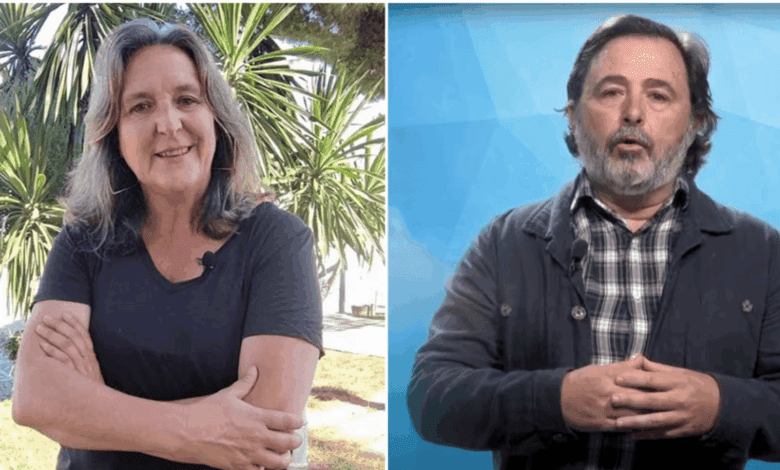
Intense discussion continues in Huelva over the tragic accident that shocked not only the city but all of Andalusia. In the Adamuz area (Adamuz, Córdoba), two Alvia high-speed trains derailed, claiming several lives. Among the victims were María Clauss and Óscar Toro—a couple whose names were long synonymous with journalism and social activism in the region.
The city is holding its breath as it waits for the official list of victims, but it is already clear: this loss is irreparable. María and Óscar were more than just colleagues; they were true agents of change who brought together people of all walks of life. Their passing is a blow to everyone who knew them personally or followed their work.
A loss for the city
María Clauss was one of the most prominent figures in Huelva’s photojournalism scene. Her images appeared in leading publications, and she herself often initiated social and cultural projects. Colleagues remember her as a trailblazer who never shied away from difficult topics and was always ready to support young photographers.
She devoted special attention to projects focused on environmental protection and humanitarian initiatives. María was not limited to working for the press—she curated her own exhibitions, helped organize festivals, and inspired others by her example. Her latest major project, dedicated to Andalusian landscapes, was only recently archived.
Journalist and public activist
Óscar Toro was not only a journalist but also an active participant in public life. Over the past two decades, he implemented numerous projects aimed at promoting human rights and fostering dialogue within society. His work went far beyond traditional journalism: Óscar developed educational programs, supported local community initiatives, and worked with young people.
A special place in his biography is held by the Invisible Association, which he led since 2016. This organization became a platform for sharing experience and exploring new forms of communication, bringing together people seeking change. Óscar was also connected with the University of Huelva, where he and María conducted summer courses and workshops.
Public recognition
The contributions of María and Óscar to the development of journalism and civil society were acknowledged not only by colleagues but also by representatives of various organizations. Their efforts were repeatedly honored with awards, and their involvement in international projects made them known far beyond Andalucía. Both were involved with the Huelva Press Association and the Andalusian College of Journalists, where they were regarded as role models.
Their ability to unite people around common goals was especially valued. María and Óscar were always at the forefront when it came to supporting charity campaigns, educational initiatives, or defending the rights of vulnerable groups. Their energy and enthusiasm inspired those around them, and their ideas often sparked large-scale change.
Family and Personal Tragedy
This tragedy has not only a public side, but also a deeply personal one. María and Óscar leave behind a daughter who, upon learning of the catastrophe, immediately began searching for news about her parents’ fate. For their family, it is an irreplaceable loss, and for the city, a stark reminder of life’s fragility and the importance of supporting each other in difficult times.
The deaths of María Klauss and Óscar Toro shocked all who knew them personally or were familiar with their work. Their contribution to the development of journalism, culture, and civil society will be remembered in Huelva and throughout Andalusia. The city is in mourning, but also recalls how much they did for those around them.