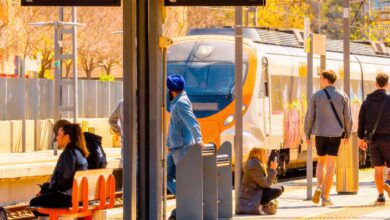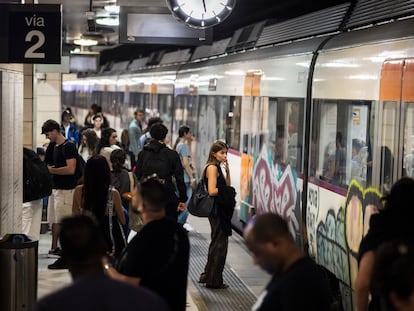
Catalonia’s railway infrastructure has come under scrutiny following a series of disruptions and accidents that have directly affected the daily lives of local residents. The Rodalies commuter rail system has faced serious challenges, prompting authorities to take emergency measures. According to El Pais, the situation is so critical that officials are considering not only repairs to specific sections but also an overhaul of the entire rail management system.
Emergency measures
Secretary for Transport José Antonio Santano admitted that the rail network falls short of the standards expected by Catalans. After a recent incident on the Gelida line, officials’ attention has focused on the Garraf tunnels in the southern part of the R2 line. Their condition is alarming, and urgent works will begin as early as March. During repairs, passengers will be offered alternative bus routes, but authorities stress that these are temporary and unavoidable solutions.
In an interview with Catalan television, Santano noted that about 400 specialists have been brought in to mitigate the consequences of the accident and strengthen the infrastructure. Work is proceeding at an accelerated pace to restore trust in Rodalies. Authorities emphasize this is an outdated system, with many components in need of immediate intervention.
Restrictions and disruptions
Currently, there are 210 speed restrictions in effect across the railway network, which negatively affects schedules and the reliability of transportation. Plans are in place to lift 26 of these restrictions soon, but this is not enough to fully restore the service. Coordination issues between Renfe and Adif lead to schedule confusion and additional delays.
Santano personally traveled the route between plaza Catalunya and Mataró to assess the situation firsthand. Although the travel time was within the normal range, the official admitted that the quality of service and passenger information needs significant improvement.
Future challenges
Particular attention is being paid to the R1 line running along the Maresme coast. Here, the threat posed by climate change is becoming increasingly real: erosion and rising sea levels could affect the stability of the tracks. Authorities are considering setting up a joint commission to protect the line before control is transferred to the Generalitat.
As for the Garraf tunnels, their condition does not meet modern safety standards. Authorities are insisting on immediate repairs and the introduction of temporary traffic schemes to minimize risks for passengers. Santano also emphasized that suburban train management should be transferred to the autonomous communities, as has already been implemented in education and healthcare.
Context and consequences
The problems of Rodalies extend beyond technical failures. According to RUSSPAIN.COM, recent train disruptions have already resulted in widespread delays and cancellations, sparking a wave of discontent among local residents. One publication provided an in-depth analysis of the consequences of the transport collapse and its impact on Catalonia’s economy — how the restoration of freight service after the suspension changed the situation.
In recent years, Spain’s railway system has repeatedly faced major disruptions and strikes. For example, in 2025, a mass drivers’ protest paralyzed rail transport across the country, while in Barcelona, regular Rodalies shutdowns triggered widespread transport chaos. These events highlight the urgent need for comprehensive infrastructure modernization and a rethink of management approaches in the transport sector. Issues of safety, reliability, and resilience in rail transport remain at the forefront of public attention, and any changes in this area generate a strong response among Spaniards.