The Spanish stock market continues to surprise: the Ibex 35 index has surpassed 16,200 points for the first time in history. This surge coincided with news of US government offices reopening, boosting investor confidence on both sides of the Atlantic.
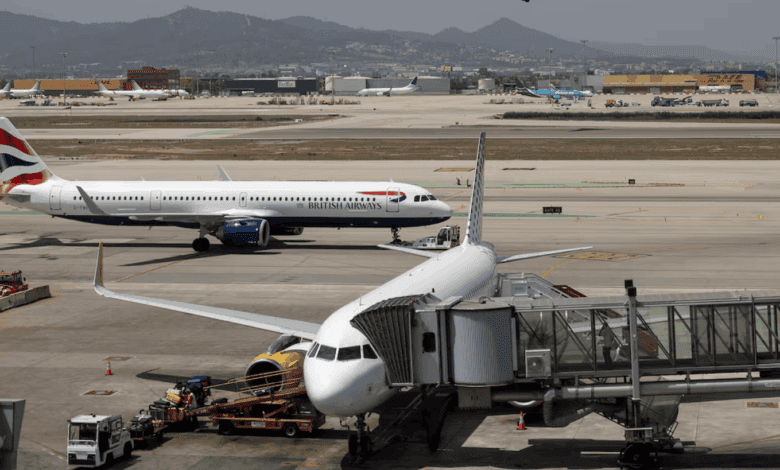
Against this backdrop, Barcelona is launching one of the most ambitious infrastructure projects in recent years. Aena management has announced the upcoming launch of a tender for the development of a new master plan for El Prat airport. A total of €4.45 million has been allocated for the preparation of this document—a figure that significantly exceeds typical budgets for such work. The reason is the complexity of environmental requirements and the need for coordination with European bodies.
The plan includes not only runway expansion and the construction of new terminal infrastructure but also large-scale environmental protection measures. Preparations for the required studies are expected to begin by mid-2026, and the final approval of the project could be received by the end of 2029. After that, land acquisition and implementation of environmental compensation measures will begin.
Major environmental contract opens new horizons for El Prat
Of the total funding, €1.5 million will be allocated to the aviation component of the project, while the remaining funds will go towards environmental changes agreed upon by Aena, the Spanish government, and Catalan authorities. If everything goes according to schedule, work on the environmental section will begin as early as 2029, and construction of the new runway and satellite terminal is set to start by 2032. These facilities are expected to be operational between 2033 and 2034.
At the same time, in 2028, expansion of Terminal T1 will get underway: the building’s facade will be pushed forward by 38 meters, adding 70,000 square meters of space. Aena’s management is confident the project is on track and will be completed on schedule.
Passenger growth and new challenges for management
The expansion of El Prat became a necessary step: by the end of 2024, the airport expects a record 55 million passengers, and in 2025 this number could exceed 58 million. The new infrastructure will help accommodate the rising flow and boost Barcelona’s status as one of Europe’s key transport hubs.
Airport management remains a topic of discussion between central and regional authorities. Some political groups insist on more active involvement of local administrations in decision-making. However, Aena’s ownership structure—where the state holds 51% of shares and the rest belongs to private investors—remains unchanged for now. The company’s leadership emphasizes the importance of dialogue with Catalan authorities and the public but insists on adhering to current regulations.
In the coming years, Barcelona will undergo a major overhaul of its transport infrastructure, which could become a model for other European metropolises. This project will not only increase El Prat’s capacity but also introduce advanced standards of environmental responsibility.