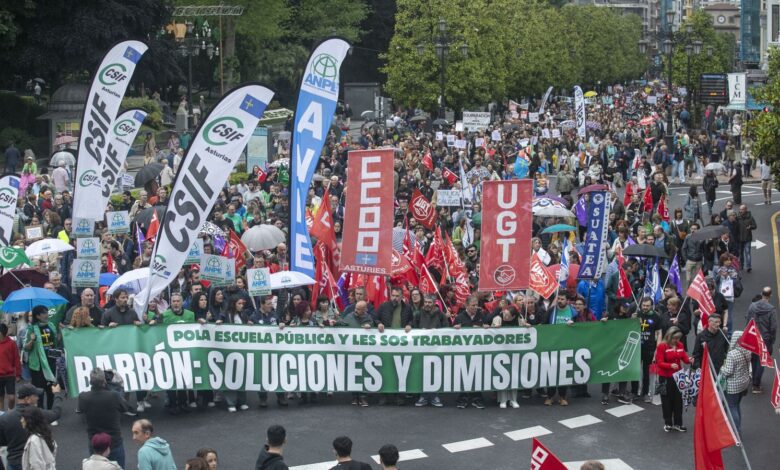
The start of the school year in Asturias is marked by tension. Following the turbulent events of last June, when teachers staged strikes and rallies en masse, the region remains far from stable. Despite agreements reached during the summer between the autonomous government and unions, many teachers feel their demands have only been partially addressed.
In June, teachers held a 13-day strike, gradually joined by other unions. Tens of thousands took to the streets, and talks with authorities ended in an agreement that most unions considered the bare minimum compromise. However, representatives of the CSIF union, who did not support the final decision, emphasize that key issues remain unresolved.
The main grievances among teachers concern salary levels and a shortage of administrative staff in schools. Authorities promised a raise of 140 euros over two years, but many consider this amount insufficient. Additionally, the agreement included just ten new administrative hires for nearly 300 schools in the region—a measure teachers see as largely symbolic.
The ratio of students to teachers also remains a contentious issue. Reducing teachers’ workloads and class sizes has been postponed until 2027, prompting further dissatisfaction among education workers.
Immediately after the agreement was signed in June, teachers increasingly felt that the conflict had only been formally resolved, with no real changes taking place. The change of leadership at the regional education ministry initially raised hopes, but two months later, educators report that the situation remains unchanged. Many of those who took part in the strikes ended the summer with financial losses, further heightening tensions.
Teachers point out that problems with staff shortages and support for children with special educational needs persist. Working conditions remain the same, and unless the authorities take concrete steps to improve the situation, a new wave of protests may erupt soon. Among the measures being discussed are refusal to participate in extracurricular activities and strict monitoring of working hours.
Discontent has also spread to employees of private schools that receive state funding. In the final days of the strikes, they joined their colleagues from public institutions, and after the agreement was signed, they too took to the streets demanding equal working conditions. Over the summer, representatives of private schools held several meetings with the ministry’s new leadership, but no final agreement was reached.
Private school employees consider the proposed salary increase of €80 per month insufficient. They note that the gap with their public school colleagues remains, and that their earnings are significantly lower than in neighboring regions, such as Cantabria. Issues regarding working hours and other employment conditions also remain unresolved.
Representatives of private schools have another meeting scheduled with ministry officials ahead of the new academic year. However, there is still uncertainty as to whether the new school year in Asturias will begin smoothly. Teachers from both education systems are prepared for further actions if their demands are not met.