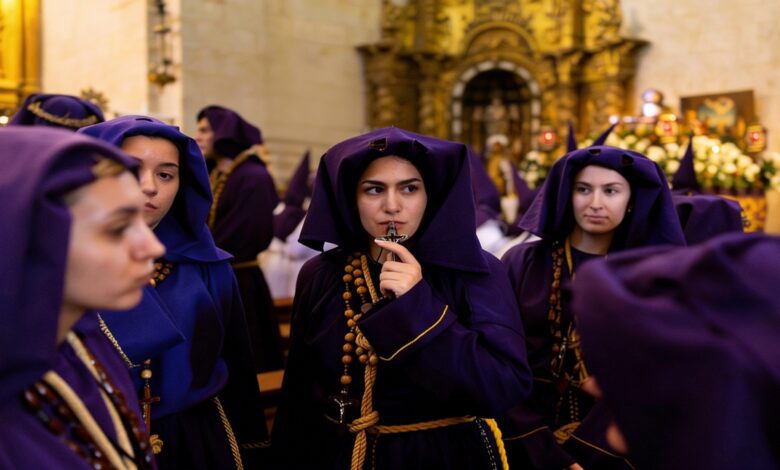
In Spain, few traditions influence the life of small towns as profoundly as La Pasión in Fuentesaúco (Zamora province). For locals, this festival has long been more than just a religious event—it is a vital part of their identity and a way to confront demographic challenges. As the town’s population has declined by 15% in recent years, participation in La Pasión has become a response to troubling trends and a symbol of community unity.
As reported by El Pais, the first mention of La Pasión in Fuentesaúco dates back to 1606. Since then, the tradition has persisted, despite social and economic changes in the region. Every Maundy Thursday, the town’s streets fill with procession participants, including members of the Nazareno brotherhood dressed in purple robes and crowned with thorns. Their presence has become an iconic symbol of the festival, and the procession itself is the main springtime event for residents and visitors alike.
The strength of the community
La Pasión has taken on particular significance thanks to the widespread participation of residents. In a town of just over 1,600 people, around 800 belong to various brotherhoods involved in the celebration. This means nearly half the population takes part, underscoring the exceptional commitment and cohesion of the community. Even as demographic decline affects many municipalities in Castilla y León, Fuentesaúco stands out as a rare example of resilient traditions.
In recent years, interest in La Pasión has grown significantly. In 2023, the festival was officially recognized as an event of regional tourist interest. This status not only attracted the attention of new visitors, but also became a driver for preserving the event’s unique elements, including traditional religious sculptures and special rituals passed down from generation to generation.
Historical continuity
La Pasión in Fuentesaúco is more than just a religious procession; it’s a complex cultural phenomenon that blends elements of faith, art, and collective memory. Every year, local residents prepare in advance for the festival, restoring costumes, updating the imagery, and maintaining a connection with their past. According to El Pais, this very continuity allows the tradition to remain relevant even in the 21st century.
The active involvement of young people and support from older generations ensure the continuity of the festival. Unlike in many other municipalities where such traditions are gradually disappearing, in Fuentesaúco, La Pasión continues to evolve, drawing attention not only from locals but also from tourists from other regions. Analysis by russpain.com points out that festivities like this are becoming an important factor in preserving small towns and their cultural heritage.
Impact on the region
The La Pasión festival has a significant impact on the economy and social life of Fuentesaúco. The influx of tourists during the festivities supports local businesses, and the high level of resident participation helps strengthen community bonds. In this context, Fuentesaúco’s experience mirrors that of other Spanish towns, where traditional festivals have become a tool for addressing demographic and economic challenges.
The issue of preserving historical and cultural values is becoming increasingly relevant for regions of Spain. For example, in Barcelona, the fate of houses on Mallorca Street is being discussed, where authorities and representatives of the Sagrada Familia are seeking a compromise on relocating residents, which also highlights the importance of balancing tradition and modern needs (details about the negotiations in Barcelona).
Context and related events
In recent years, Spain has seen growing interest in traditional festivals, especially in small towns. For example, Semana Santa in Andalusia attracts thousands of tourists annually and supports local communities. In Castilla y León, similar processions take place in towns like Toro and Zamora, also marked by active local participation. These events are becoming not only cultural but also economic drivers for regions facing depopulation and an aging population. Such examples demonstrate that preserving traditions can be a key element for the sustainable development of small towns in Spain.