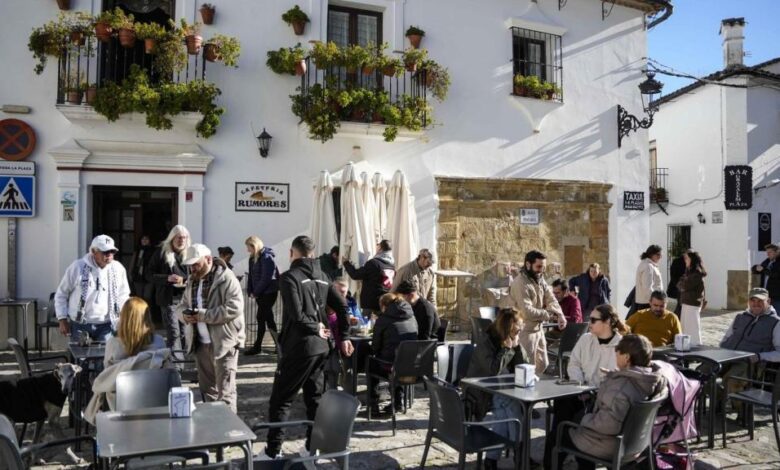
In February, Grazalema (province of Cádiz) was thrust into the national spotlight after a massive flood forced over 1,600 residents to urgently evacuate their homes. For a region where such disasters are rare, the consequences were substantial: dozens of families had to seek temporary shelter, and the local infrastructure faced severe challenges. Restoring normal life here became a top priority for local and regional authorities, as it was not only a matter of safety, but also about regaining public trust in the emergency response system.
This week, Andalusian authorities announced that 35 more residents have been granted permission to return to their homes. This decision was made following a thorough inspection of the buildings and an assessment of potential risks. Currently, 86 people remain evacuated, as their homes are still considered unsafe to inhabit. According to Ale Espanol, experts continue to monitor the situation to ensure that all affected residents can return as safely as possible.
Experts’ work
The Technical Committee of the Andalusia Emergency Service (EMA) conducted a series of building inspections to determine which structures are safe for habitation. The process involved not only local specialists but also experts from various scientific institutes, including geologists, architects, and engineers. Advanced techniques were employed—tomography, GNSS positioning, and aerial drone photography. This made it possible to detect even minimal deformations and shifts in structures, which is critically important for assessing safety.
Authorities emphasize that the decision to allow residents to return is made only after a full assessment of each house’s condition. This approach helps prevent repeat evacuations and minimizes risks for people. According to representatives of the 112 Andalucía service, scientific data has become a key factor in decision-making. Importantly, the return process is phased: first, those whose homes are deemed completely safe are allowed back, while the rest await further evaluations.
Coordination and support
A special flood response plan was implemented to manage the situation, involving not only rescue services but also scientific advisors from CSIC (Spanish National Research Council), as well as architects and engineers from specialized institutes. This interdisciplinary approach made it possible to respond quickly to changes and make decisions based on objective data. The committee included experts in hydrogeology, geophysics, and geodesy, as well as representatives from the Institute of Geology and Mineralogy, the National Geographic Institute, and the University of Granada.
The surveys involved not only traditional methods but also innovative technologies. For example, seismic tomography and GNSS made it possible to monitor even the slightest changes in the structures of buildings and the ground in real time. This allowed for the prompt identification of potential threats and adjustment of the resident return plan. In addition, drone aerial photography provided detailed images of the disaster area, speeding up the overall analysis.
Recovery begins
A gradual return of residents became possible thanks to coordinated efforts by all services and the use of modern technologies. According to Ale Espanol, most evacuees have been able to return home in recent weeks, while the number of those still displaced is decreasing every day. Authorities promise that no family will be overlooked and continue to monitor building conditions to eliminate any risks.
The situation in Grazalema echoes other recent disasters in Spain. For example, not long ago in Andalusia, storm Leonardo led to mass evacuations and road closures, as detailed in the article on the aftermath of the storm and the actions taken by the authorities. Such events highlight the importance of swift response and coordination between services to minimize damage and restore life in affected areas as quickly as possible.
Floods in Spain are uncommon, but each incident becomes a serious challenge for local residents and infrastructure. In recent years, the country has faced several major natural disasters: heavy rains in Murcia and Valencia, landslides in Málaga, and sudden flash floods in Galicia. In each case, authorities implemented new monitoring and response methods, which shortened evacuation times and sped up the return of people to their homes. The experience in Grazalema may serve as an example for other regions where the risk of such incidents remains.