A significant political shift is brewing in Montecarmelo, one of Madrid’s most electorally stable districts. The trigger was a municipal initiative to situate a waste collection facility and a SELUR base directly next to residential buildings and schools. This decision sparked a wave of outrage among local residents, who decided to gauge the true sentiment in the neighborhood through an independent survey.
The survey results proved surprising: voters traditionally supporting the Partido Popular are now widely reconsidering their loyalties. While the party previously enjoyed a confident majority, its position has notably weakened. Against a backdrop of growing dissatisfaction, more residents are now inclined to support Vox, which could spark a change in the political leadership of the district.
Survey shows sharp decline in support for Partido Popular
More than three hundred people participated in the survey, enough to provide an accurate snapshot of sentiment in this neighborhood of around 21,000 residents. Even accounting for a margin of error, the trend is clear: Partido Popular’s support has fallen from 61% to 24%. At the same time, Vox has increased its rating from 12% to 28%, overtaking its rivals for the first time to become Montecarmelo’s most popular political force.
This redistribution of votes could have serious consequences for future elections. In the past, Partido Popular managed to secure a majority by a narrow margin, and now that balance is at risk. The sharp shift was triggered by the situation surrounding the construction of the municipal facility, which is opposed not only by residents but also by all opposition forces in the municipality.
Reasons for discontent: environment, safety, and comfort
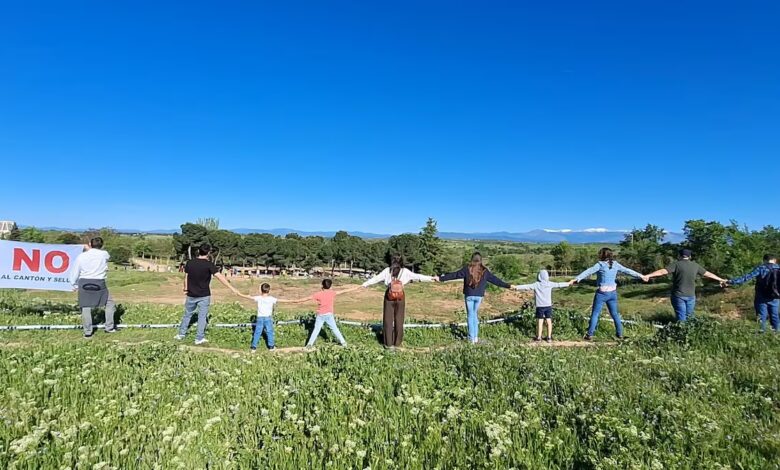
The main argument against the construction project is the chosen location. The new municipal center is planned for the very heart of the neighborhood, on land that previously served as a green zone and a recreational area for families. Residents fear a decline in environmental quality, the appearance of unpleasant odors, increased noise, and a rise in traffic near homes and schools.
One of the biggest concerns is the project’s proximity to educational institutions: Colegio Alemán, Escuela Infantil Sol Solito, and Colegio Santa María la Blanca are all very close by. Parents worry about the health and safety of their children, since such facilities are usually built in industrial areas, not residential neighborhoods.
The situation was further aggravated by the recent tree felling carried out in the spring. All the transplanted plants died, which caused additional outrage and brought residents together in the effort to protect their neighborhood.
Residents’ resistance and authorities’ actions
The protest movement in Montecarmelo quickly gained momentum. Local activists have formed coordinating groups in messaging apps, are organizing spontaneous actions, and are pushing for a delay in the start of construction. Parent committees from three schools play a particularly important role in the resistance and have officially appealed to regional authorities, asking them to intervene and halt the project.
Despite numerous appeals, there has yet to be any response from the regional government. Residents are not giving up and continue to fight to preserve the familiar character of their neighborhood. They have the support not only of neighbors but also representatives of all opposition parties in the city council.
Legal aspects and possible developments
An important factor in the conflict was a judicial ruling stating that the required environmental studies had not been conducted to move the utility facility into the residential area. This decision gave opponents of the construction further arguments and increased pressure on city officials.
It remains unclear whether the protests will lead to the project’s cancellation, but what is clear is that Montecarmelo’s political landscape is changing before our eyes. Vox continues to gain supporters, while traditional favorites are losing public trust by ignoring residents’ opinions. Ahead are new phases of the struggle and, possibly, a reconsideration of plans for the district’s development.